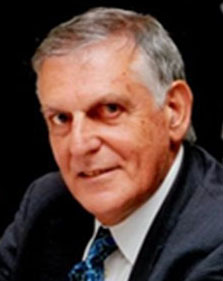

In Honor of Nobel Laureate Dr. Aaron Ciechanover



| SESSION: MathematicsWedPM2-R3 |
Kauffman International Symposium (8th Intl. Symp. on Sustainable Mathematics Applications) |
| Wed. 19 Nov. 2025 / Room: Dusit 3 | |
| Session Chairs: Louis Kauffman; Boris Apanasov; Student Monitors: TBA | |
The answer to Wheeler's question ``How come the quantum?'' given by Kauffman is presented and explored. The answer, going back to an approach by Dirac, proposes a topological origin of Planck's quantum of action h-bar. The proposal assumes that space, particles and wave functions consist of unobservable strands of Planck radius, and that their crossing switches define h-bar. The proposal is checked against all quantum effects, including non-commutativity, spinor wave functions, entanglement, Heisenberg's indeterminacy relation, and the Schrödinger and Dirac equations. The principle of least action is deduced. The spectra of elementary particles, the gauge interactions, and general relativity are derived. Estimates for elementary particle masses and for coupling constants, as well as numerous experimental predictions are deduced. Complete agreement with observations is found. The derivations also appear to eliminate alternatives and thus provide arguments for the uniqueness of the proposal.