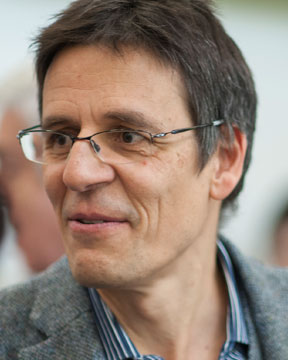

In Honor of Nobel Laureate Dr. Aaron Ciechanover


| SESSION: IronWedPM1-R7 |
11th Intl. Symp. on Advanced Sustainable Iron & Steel Making |
| Wed. 19 Nov. 2025 / Room: Lotus | |
| Session Chairs: Andrey Dmitriev; Tateo Usui; Student Monitors: TBA | |
Iron ore sintering is a critical agglomeration process in iron and steelmaking, enhancing the physical and chemical characteristics of raw materials to optimize blast furnace performance. The granulation stage, wherein fine iron ore particles are combined with fluxes, fuels, and binders, is pivotal in determining the quality of the final sinter. Conventional granulation methods typically employ ambient-temperature water, often resulting in suboptimal granule formation, uneven moisture distribution, and reduced permeability in the sinter bed. This study investigates the application of hot water, at temperatures ranging from 60°C to 95°C, during the granulation process to improve raw mix properties and sintering performance. The controlled addition of hot water raised the temperature of the green mix by at least 10°C, achieving final mix temperatures between 35°C and 45°C and a target moisture content of 7.5% to 8%. The modified process led to more uniform water dispersion and improved granule formation, as reflected by an increase in the balling index from 1.22% to 1.53%. The granulated mix was subsequently sintered under controlled suction conditions, resulting in enhanced sinter yield and higher production rates. Overall, the use of hot water in the granulation stage significantly improves process efficiency, granule quality, and the performance of the sintering operation.
| SESSION: IronWedPM2-R7 |
11th Intl. Symp. on Advanced Sustainable Iron & Steel Making |
| Wed. 19 Nov. 2025 / Room: Lotus | |
| Session Chairs: Vladimir Tsepelev; Dhanraj Patil; Student Monitors: TBA | |
The present study introduces an industrial-scale innovation for intensifying the iron ore sintering process through coal gas injection via a waste gas recirculation system. Coal gas, a byproduct generated during the coking process in coke ovens, is rich in combustible components such as hydrogen, methane, and carbon monoxide. Coal gas, injected into the upper layer of the sinter bed through a specially designed pipeline and nozzle arrangement within the recirculation hood, promotes a more uniform combustion front, enhances high-temperature retention, and improves heat transfer across the sintering bed.
The process has been successfully implemented at the plant level and has shown clear operational benefits. Key improvements include a 5–10% increase in the yield of coarse sinter (+10 mm), a 1–2% reduction in fine particles (−5 mm), and a 1–2% gain in sinter mechanical strength. The mean sinter particle size also increased by several millimeters, contributing to better handling and blast furnace performance. Furthermore, solid fuel (coke) consumption was reduced by 3–5% per ton of sinter produced, demonstrating significant potential for energy savings.
By partially substituting coke with cleaner-burning coal gas, the process also contributes to lower carbon emissions and reduced environmental impact. These improvements underscore the dual benefits of this technique: enhancing product quality and operational efficiency while supporting sustainability goals. Overall, coal gas injection through the waste gas recirculation system offers a robust, scalable, and cost-effective upgrade for integrated steel plant sintering operations.
| SESSION: CarbonThuPM1-R7 |
8th Intl. Symp. on Sustainable Carbon and Biocoke and their Industrial Application |
| Thu. 20 Nov. 2025 / Room: Lotus | |
| Session Chairs: Paulo Assis; Philip Aster; Student Monitors: TBA | |
The iron and steel sector is a key driver of global economic development and is one of the largest consumers of industrial energy, largely dependent on fossil fuels. Within this sector, sinter making is a vital step in the ironmaking process, accounting for approximately 10% of total energy use—of which about 78% is derived from coke breeze. This heavy reliance contributes substantially to greenhouse gas emissions, as well as SOx and NOx pollutants. Replacing fossil fuels with biomass, a renewable and cleaner energy source, presents a promising path toward carbon-neutral sintering. This study explores the potential of biochar, obtained through the pyrolysis of biomass, as a viable and sustainable fuel alternative in the sintering process. The present study investigates the feasibility of replacing solid fuel upto 100 % within the sintering process with biochar through lab scale sinter pot trials. Biochar's high carbon content, improved energy density, and low volatile matter make it a promising candidate for enhancing thermal efficiency and reducing greenhouse gas emissions. Charcoal with a size fraction of -3.15 mm was used for the current trials. In comparison to the conventional mix, sinter blends incorporating charcoal demanded higher moisture content to attain effective granulation, primarily due to charcoal's higher porosity and moisture absorption capacity. The use of charcoal as a partial fuel substitute in the sintering process led to a noticeable reduction in the green mix bulk density due to its inherently lower material density. This change also contributed to a decline in the balling index, indicating weaker pellet formation. Additionally, increased charcoal content disrupted the consistency of the heat and flame fronts, resulting in reduced thermal efficiency and a subsequent decrease in sinter yield. However, the higher combustibility and volatile matter of charcoal enabled faster temperature build-up, which shortened the overall sintering time. Despite these changes, sinter productivity remained within an acceptable operational range. The presence of charcoal affected the exhaust gas composition, with a reduction in overall SO2 and NOx emissions. With increasing biochar substitution, NOx emissions were reduced from approximately 100 ppm to 34 ppm, while SO₂ emissions decreased from around 5.3 ppm to 3.3 ppm.