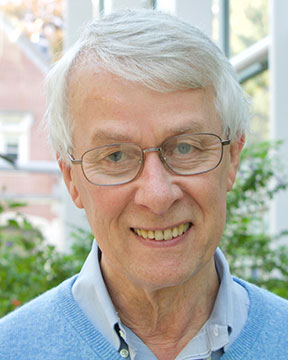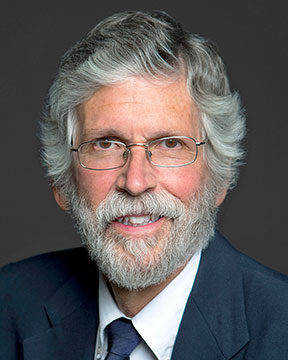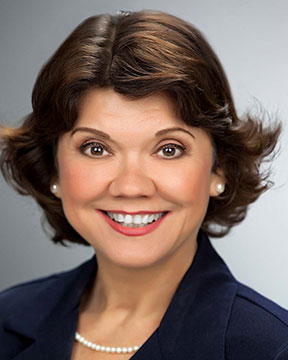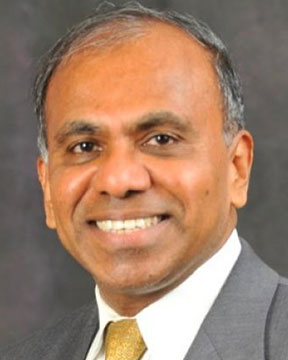

In Honor of Nobel Laureate Dr. Aaron Ciechanover

| SESSION: PharmaceuticalTuePM1-R9 |
Tanner International Symposium (2nd Intl. Symp. on Pharmaceutical Sciences and Industrial Applications for Sustainable Development) |
| Tue. 18 Nov. 2025 / Room: Benjarong Main Rest | |
| Session Chairs: Go Kimura; Assaf Friedler; Student Monitors: TBA | |
Young researchers in academia face a lot of hurdles while establishing their scientific careers. They are caught up in a series of traps where one can’t be overcome by overcoming all the others as well: time, funding, publishing, research, teaching, being present at conferences, expanding their skillset, building and getting into networks etc. All those topics are intertwined; all shall be served at once and all at the fullest extent possible.
Consequentially, this situation has a high potential of becoming a vicious circle unless it is broken at one or more points.
Here, foundations can set in and help in multiple ways to break the circle and overcome this conundrum effectively. One example is the Galenus-Privatstiftung [1], a non-profit scientific foundation that aims to support postdocs, habilitation candidates, assistant and junior professors in the field of pharmaceutical technology and biopharmacy. The foundation awards the Galenus Supports, the Technology Prize, enables visiting professorships as well as international workshops.
| SESSION: PharmaceuticalTuePM2-R9 |
Tanner International Symposium (2nd Intl. Symp. on Pharmaceutical Sciences and Industrial Applications for Sustainable Development) |
| Tue. 18 Nov. 2025 / Room: Benjarong Main Rest | |
| Session Chairs: Ang-Yang Yu; Martin Bultmann; Student Monitors: TBA | |
Education is not only one of the 17 United Nations Sustainable Development Goals (SDG) [1] but it also plays a detrimental role in achieving sustainability [240]. Education implies active and passive access to knowledge, which comprises unbiased access to scientific literature as a major component. Up to the 1980s this meant textbooks and journal articles, that had to be bought by the recipient or borrowed from a local or remote library free of charge or for a comparably small fee.
An additional source of information came in the 1990s when the internet entered offices, and private households. Initially, all the information was publically available free of charge, but eventually commercialization set in.
On the other end of the spectrum are the scientists, whose research culminates in the generation of knowledge, evident by publication. Simplified, a researcher builds his/her scientific reputation on the number of publications authored. Publications became -and still are- a kind of virtual currency in academia – “Publish or perish”.
Comparing the supply chain of knowledge with that of typical other goods, there always used to be a slight mismatch between the flow of goods and services and the flow of money. There is a strong similarity between common goods and books, where supplier and author are compensated (e.g. 10% of sales price for authors) and a quality check is incorporated; either at supplier, wholeseller or retail shop, and this quality assurance (QA) function might be internal or outsourced. However, usually scientific print journals did not pay the authors for content nor were peer reviewers paid. The customer or reader is charged for the goods or literature received. However, libraries served as a cost effective way to make knowledge cost effectively available.
The situation intiensified and the mismatch became even more evident since the introduction of open access or public access schemes: To allow open access for the user, the publisher requires the inversion of monetary flow through reimbursment by the author. This means the content provider now also provides the financial funding (typically a mid four-figure USD amount per publication)!
Especially early career scientists are hurt the most by open access publishing schemes: On the one hand they need to build their reputation by publishing their findings, but it is not only the publication itself that counts; it is also the number of citations that one receives. The lower the threshold for readers the more citaions. Any kind of restricted access poses a hurdle for the readers and the likelihood for being cited diminishes.
On the other hand, without reputation it is hard to get funding for research work and if the scarce funds have to go to the publisher, then there’s hardly any leftover for research (Publish and perish) and vice versa. A vicious circle right from the start that is hard to overcome; especially if the job of the scientist also comprises teaching (fulfilling educational service aka spreading knowledge to the students) by lecturing, supervising and conducting lab courses).
This article describes approaches to escape this conundrum.