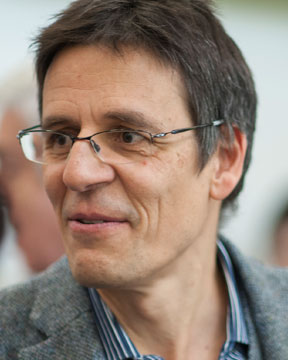

In Honor of Nobel Laureate Dr. Aaron Ciechanover



| SESSION: CompositeTuePM3-R1 |
Meyers International Symposium (11th Intl. Symp. on Composite, Ceramic & Nano Materials Processing, Characterization & Applications) |
| Tue. 18 Nov. 2025 / Room: Dusit 1 | |
| Session Chairs: Pedro Henrique Poubel Mendonça Da Silveira; Student Monitors: TBA | |
Evaluating the permanent deformation of soils used in pavements or final earthwork layers is essential for designing highways and railways when adopting a mechanistic approach to structural design. However, due to environmental concerns, exploiting new soil deposits for such projects has become increasingly challenging, making soil stabilization or reinforcement a viable alternative. In this context, this study sought to explore the effect of adding piassava fibers to a clayey soil commonly found in subgrade layers in Brazil. Repeated load triaxial tests were conducted to assess permanent deformation under two pairs of deviator and confining stresses: (210, 70) and (450, 100) kPa, with 100,000 loading cycles applied at a frequency of 5 Hz. Resilient modulus tests were performed following national standards, using samples of natural soil, natural soil with 1.5% piassava fiber, and natural soil with 1.5% piassava fiber and 2% cement. Results showed that natural soil exhibited high permanent deformation under the higher stress pair, while the simple addition of fibers significantly reduced deformation. With the addition of cement, total permanent deformation was minimal, indicating that piassava fiber is a promising material for reinforcing pavements or earthworks.
| SESSION: CompositeWedPM2-R1 |
Meyers International Symposium (11th Intl. Symp. on Composite, Ceramic & Nano Materials Processing, Characterization & Applications) |
| Wed. 19 Nov. 2025 / Room: Dusit 1 | |
| Session Chairs: Belayne Zanini Marchi; Student Monitors: TBA | |
The growing demand for sustainable solutions in civil construction, particularly in tropical regions facing a shortage of natural aggregates, has encouraged the use of mining waste as an alternative raw material for the production of artificial aggregates (Cabral et al., 2008). This study investigates the mineralogical interactions between sandy and silty textured soils and a clayey mining sludge, subjected to calcination processes aimed at forming reactive phases.
The methodology involved the formulation of mixtures with varying proportions of clayey sludge, subjected to calcination at temperature ranges defined based on mineralogical and thermal analyses. The samples were characterized using X-ray diffraction (XRD), scanning electron microscopy (SEM), and thermogravimetric analysis (TGA), following established practices for assessing the reactivity of calcined clays (Pinheiro et al., 2023; Monteiro et al., 2004).
Preliminary results indicated the formation of potentially pozzolanic phases, such as amorphous aluminosilicates, at temperatures above 700 °C, corroborating literature findings on the influence of firing temperature on clay activation (da Silva et al., 2015). The microstructure observed via SEM showed good integration between the constituents of the mixtures after calcination, suggesting the feasibility of combining soils and mining residues for pavement applications.
| SESSION: CompositeWedPM3-R1 |
Meyers International Symposium (11th Intl. Symp. on Composite, Ceramic & Nano Materials Processing, Characterization & Applications) |
| Wed. 19 Nov. 2025 / Room: Dusit 1 | |
| Session Chairs: Clarissa De Paula Dias; Student Monitors: TBA | |
The shortage of natural aggregates in tropical regions has driven the development of alternative materials for road infrastructure applications. Among these, artificial aggregates produced through clay calcination have been investigated for their mechanical properties and pozzolanic reactivity potential (Cabral, 2008; da Silva et al., 2015; Friber et al., 2023). This study proposes the production of artificial aggregates from soil–waste mixtures, incorporating a clay-rich mining sludge, aiming to add value to mineral waste and reduce reliance on conventional materials.
The formulations were defined based on preliminary mineralogical analyses using X-ray diffraction (XRD) and scanning electron microscopy (SEM), with the objective of identifying the phases formed and microstructural changes induced by calcination (Monteiro et al., 2004; Pinheiro et al., 2023). The calcination temperature was selected to maximize the formation of amorphous cementitious phases. After calcination, the aggregates were used to mold cylindrical specimens using split molds, which were then subjected to repeated load triaxial tests to determine the permanent deformation a key parameter for assessing the mechanical performance of materials used in pavement base and subbase layers.
Initial results indicated that the artificial aggregate exhibits elastic behavior compatible with that of traditional pavement materials, reinforcing its potential as a technically and environmentally sustainable solution.