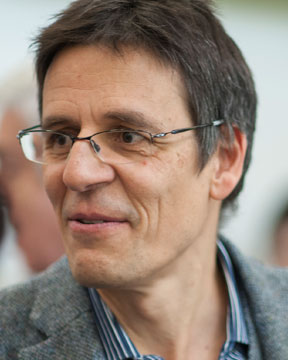

In Honor of Nobel Laureate Dr. Aaron Ciechanover


| SESSION: CarbonThuPM1-R7 |
8th Intl. Symp. on Sustainable Carbon and Biocoke and their Industrial Application |
| Thu. 20 Nov. 2025 / Room: Lotus | |
| Session Chairs: Paulo Assis; Philip Aster; Student Monitors: TBA | |
The use of biocoke in metallurgical processes to reduce the carbon footprint of metal production has gained significant traction in recent years. This trend is particularly evident in Central Europe, where biocoke production has grown rapidly. While utilization of biocoke has already become standard in certain processes, such as ferroalloy production, its implementation in other metallurgical routes remains challenging.
Key limitations include its high surface area and reactivity, low mechanical strength, and low bulk density. These properties often make even partial substitution of fossil carbon infeasible - especially in systems like rotary kilns, small shaft furnaces or vertical retorts. In such setups, the reducing agent undergoes a pre-heating phase and ideally remains inert for one to two hours before entering the reduction zone. Under these conditions, conventional biocoke is ineffective.
At the Chair of Nonferrous Metallurgy, Technical University of Leoben, new strategies have been developed to tailor the properties of pyrolyzed biomass for metallurgical use. Through advanced micro-granulation combined with small quantities of special additives, reactivity can be reduced by at least 50%. This treatment also enhances density and improves performance in possible subsequent agglomeration processes such as briquetting.
Carbon produced via methane pyrolysis in metallic melts represents a promising sustainable alternative to conventional graphite. This material combines a CO₂-reduced production pathway with physical and chemical properties that can be tailored for high-performance applications. Due to the presence of metallic residues (e.g., Cu, Fe, Sn) introduced during the pyrolysis process, a comprehensive analytical approach is required to evaluate its structural integrity, purity, and functionality [1].
This study presents a multimodal characterization strategy combining Raman spectroscopy, scanning electron microscopy (SEM), and X-ray fluorescence analysis (XRF). Raman spectroscopy provides detailed insights into carbon bonding states, crystallinity, and defect density, particularly through the evaluation of D-, G-, and 2D-bands. SEM imaging enables morphological analysis, surface topology assessment, and particle size evaluation at sub-micrometer resolution. XRF complements these methods by quantifying trace metallic impurities originating from the melt environment, which may influence subsequent material processing and application behavior [2,3].
The obtained results serve as a basis for targeted purification and refinement processes that enable the use of pyrolysis-derived carbon as a functional material across a wide range of applications. Potential use cases include bipolar plates for fuel cells, anode materials for lithium-ion batteries, electrically conductive polymers, expandable flame-retardant fillers, lubricants, and electrodes for electric arc furnaces. The unique combination of graphite-like properties with a sustainable synthesis route addresses the increasing industrial demand for environmentally friendly high-performance materials. A central challenge remains the precise adjustment of material characteristics to meet specific performance requirements in each application sector [4–6].