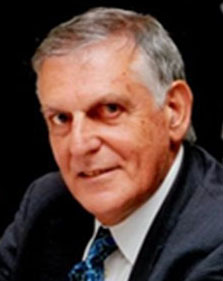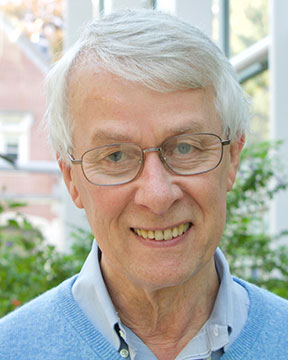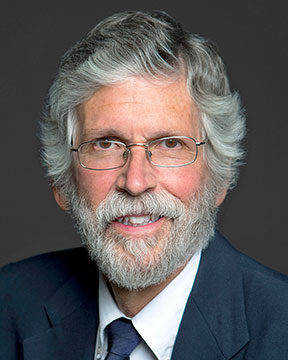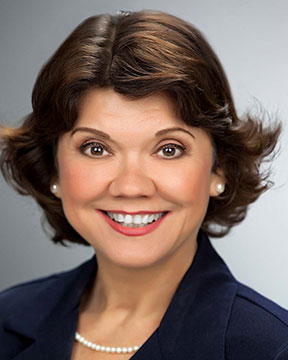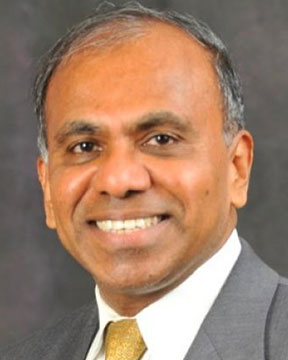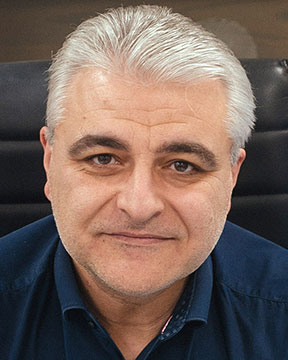

In Honor of Nobel Laureate Dr. Aaron Ciechanover

| SESSION: MathematicsTuePM1-R3 |
Kauffman International Symposium (8th Intl. Symp. on Sustainable Mathematics Applications) |
| Tue. 18 Nov. 2025 / Room: Dusit 3 | |
| Session Chairs: Ruggero Maria Santilli; Peter Rowlands; Student Monitors: TBA | |
In this talk we discuss how, starting with John Horton Conway’s skein theory of the Alexander polynomial, that new invariants of knots arose (the Jones polynomial among them) that are related to statistical mechanics. I will tell the story of how I discovered statistical mechanics summation models for the Alexander and Jones polynomials. The will continue, via the work of Ed Witten, to gauge theory and quantum field theory.
This relationship of knot theory and physical theory is intimately tied with a mystery discovered by Herman Weyl in the early part of the 20th century. Weyl discovered that if one takes a line element A in spacetime as a differential 1-form, and writes down dA in the sense of the differential forms of Grassmann, then dA expresses the mathematical form of the Electromagnetic Field.
The field is expressed by the holonomy of the form A around loops in spacetime. Weyl was so impressed with his observation that he suggested building a Geometry that would unify his line element A and the metric of General Relativity to make a unified field theory. But Einstein asked why should spacetime lengths change under transport? And the Weyl theory did not quite succeed. Yet it did succeed by the quantum reformulation of Fritz London, where the key was to see that the holonomy could represent a phase change in the quantum wave-function. Experimental confirmation of the influence of a gauge potential A on quantum interference came much later with the Aharonov-Bohm effect. Theoretical influence of this idea came with the generalization of A to a Lie algebra valued 1-form and the corresponding generalized gauge theories such as Yang-Mills theory. Then the physical field is not dA but dA + A^A and the holonomy remains important. Witten suggested the use of a spatial gauge A so that measuring its holonomy along a knot K would produce invariants such as the Jones polynomial. Witten understood that a formal answer required integration over all the connections A. This integral of Witten is a functional integral in the quantum field theory associated with A. It has deep formal properties that inform indeed not only the Jones polynomial, but a host of other invariants as well, and the seeds of relationships with the three manifold invariants of Reshetikhin and Turaev, and the Vassiliev invariants of knots and links. Topological Quantum Field Theory was born. This is the story of a revolution in knot theory that started with Conway in 1969, focused by Jones and Kauffman, and began again with Witten in 1988. This talk will discuss these matters and will mention more recent developments such as Khovanov homology whose physical interpretations are not yet fully articulated. The talk will be self-contained and suitable for a general scientific audience. We will illustrate these key ideas in the relationship of knots and natural science with geometry, diagrams and dynamics.
Aspects of gauge theory, Hamiltonian mechanics and quantum mechanics arise naturally in the mathematics of a non-commutative framework for calculus and differential geometry. This talk discusses our general results in this domain. We give a derivation of a generalization of the Feynman-Dyson derivation of electromagnetism using the non-commutative context and diagrammatic techniques. We then discuss, in more depth, relationships with gauge theory and differential geometry. The key aspect of this approach is the representation of derivatives as commutators. This creates the context of a non-commutative world and allows a synoptic view of patterns in mathematical physics.
Finally, we explore the relationship of general relativity and non-commutative algebra via the expression of covariant derivatives in terms of commutators and articulate the Bianchi Identity in terms of the Jacobi Identity. In this way we can formulate curvature in terms of commutators and formulate algebraic constraints on curvature so that our curvature tensors have the requisite symmetries to produce a divergence free Einstein tensor. The talk will discuss these structures and their relationship with classical general relativity.
| SESSION: MathematicsTuePM2-R3 |
Kauffman International Symposium (8th Intl. Symp. on Sustainable Mathematics Applications) |
| Tue. 18 Nov. 2025 / Room: Dusit 3 | |
| Session Chairs: TBA Student Monitors: TBA | |
These talks are a short introduction to knot theory from a combinatorial point of view and with an eye towards applications to Natural Science. The talks are self-contained and form a short introductory course in knot theory.
1. Introduction to knots and unknots, Reidemeister moves, linking numbers, Fox coloring to detect knotting and linking. Rational tangles and fractions via coloring. Link,Twist, Writhe and DNA.
These talks are a short introduction to knot theory from a combinatorial point of view and with an eye towards applications to Natural Science. The talks are self-contained and form a short introductory course in knot theory.
2. Introduction to the Kauffman bracket polynomial, Many examples. Discussion of other knot polynomials. Relationships with graph theory and with statistical mechanics, state summation models, the Potts model, tensor networks and categories.
| SESSION: MathematicsWedPM1-R3 |
Kauffman International Symposium (8th Intl. Symp. on Sustainable Mathematics Applications) |
| Wed. 19 Nov. 2025 / Room: Dusit 3 | |
| Session Chairs: Peter Rowlands; Student Monitors: TBA | |
These talks are a short introduction to knot theory from a combinatorial point of view and with an eye towards applications to Natural Science. The talks are self-contained and form a short introductory course in knot theory.
3. Introduction to the Khovanov Homology via working with the bracket polynomial and cube categories and applications of Rasmussen invariant to reconnection numbers for knotted vortices. Discussion of other applications of knot theory and knot homology.
These talks are a short introduction to knot theory from a combinatorial point of view and with an eye towards applications to Natural Science. The talks are self-contained and form a short introductory course in knot theory.
4. Knot theory and quantum computing. This talk will discuss how quantum algorithms that compute the Jones polynomial can be constructed, how the Fibonacci model - based in knot theoretic recoupling theory - can be used to create universal quantum computation, and how this model is related to the Quantum Hall effect. We will also discuss the role of the Dirac equation and Majorana fermions in topological quantum computing.
| SESSION: MathematicsWedPM2-R3 |
Kauffman International Symposium (8th Intl. Symp. on Sustainable Mathematics Applications) |
| Wed. 19 Nov. 2025 / Room: Dusit 3 | |
| Session Chairs: Louis Kauffman; Boris Apanasov; Student Monitors: TBA | |
The answer to Wheeler's question ``How come the quantum?'' given by Kauffman is presented and explored. The answer, going back to an approach by Dirac, proposes a topological origin of Planck's quantum of action h-bar. The proposal assumes that space, particles and wave functions consist of unobservable strands of Planck radius, and that their crossing switches define h-bar. The proposal is checked against all quantum effects, including non-commutativity, spinor wave functions, entanglement, Heisenberg's indeterminacy relation, and the Schrödinger and Dirac equations. The principle of least action is deduced. The spectra of elementary particles, the gauge interactions, and general relativity are derived. Estimates for elementary particle masses and for coupling constants, as well as numerous experimental predictions are deduced. Complete agreement with observations is found. The derivations also appear to eliminate alternatives and thus provide arguments for the uniqueness of the proposal.