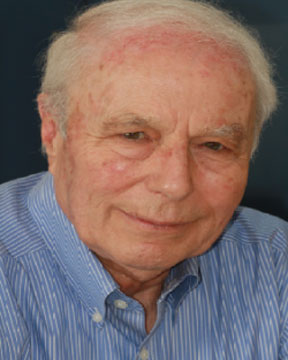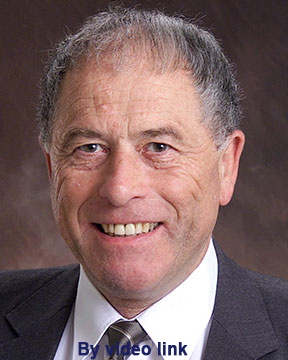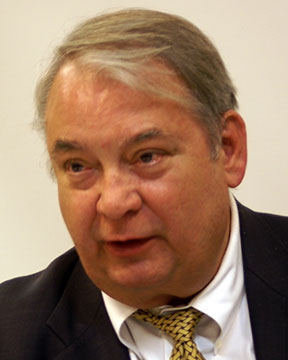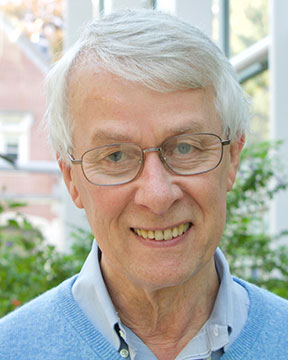

In Honor of Nobel Laureate Dr. Aaron Ciechanover


| SESSION: PharmaceuticalTuePM1-R9 |
Tanner International Symposium (2nd Intl. Symp. on Pharmaceutical Sciences and Industrial Applications for Sustainable Development) |
| Tue. 18 Nov. 2025 / Room: Benjarong Main Rest | |
| Session Chairs: Go Kimura; Assaf Friedler; Student Monitors: TBA | |
Young researchers in academia face a lot of hurdles while establishing their scientific careers. They are caught up in a series of traps where one can’t be overcome by overcoming all the others as well: time, funding, publishing, research, teaching, being present at conferences, expanding their skillset, building and getting into networks etc. All those topics are intertwined; all shall be served at once and all at the fullest extent possible.
Consequentially, this situation has a high potential of becoming a vicious circle unless it is broken at one or more points.
Here, foundations can set in and help in multiple ways to break the circle and overcome this conundrum effectively. One example is the Galenus-Privatstiftung [1], a non-profit scientific foundation that aims to support postdocs, habilitation candidates, assistant and junior professors in the field of pharmaceutical technology and biopharmacy. The foundation awards the Galenus Supports, the Technology Prize, enables visiting professorships as well as international workshops.
| SESSION: PharmaceuticalTuePM2-R9 |
Tanner International Symposium (2nd Intl. Symp. on Pharmaceutical Sciences and Industrial Applications for Sustainable Development) |
| Tue. 18 Nov. 2025 / Room: Benjarong Main Rest | |
| Session Chairs: Ang-Yang Yu; Martin Bultmann; Student Monitors: TBA | |
Education is not only one of the 17 United Nations Sustainable Development Goals (SDG) [1] but it also plays a detrimental role in achieving sustainability [240]. Education implies active and passive access to knowledge, which comprises unbiased access to scientific literature as a major component. Up to the 1980s this meant textbooks and journal articles, that had to be bought by the recipient or borrowed from a local or remote library free of charge or for a comparably small fee.
An additional source of information came in the 1990s when the internet entered offices, and private households. Initially, all the information was publically available free of charge, but eventually commercialization set in.
On the other end of the spectrum are the scientists, whose research culminates in the generation of knowledge, evident by publication. Simplified, a researcher builds his/her scientific reputation on the number of publications authored. Publications became -and still are- a kind of virtual currency in academia – “Publish or perish”.
Comparing the supply chain of knowledge with that of typical other goods, there always used to be a slight mismatch between the flow of goods and services and the flow of money. There is a strong similarity between common goods and books, where supplier and author are compensated (e.g. 10% of sales price for authors) and a quality check is incorporated; either at supplier, wholeseller or retail shop, and this quality assurance (QA) function might be internal or outsourced. However, usually scientific print journals did not pay the authors for content nor were peer reviewers paid. The customer or reader is charged for the goods or literature received. However, libraries served as a cost effective way to make knowledge cost effectively available.
The situation intiensified and the mismatch became even more evident since the introduction of open access or public access schemes: To allow open access for the user, the publisher requires the inversion of monetary flow through reimbursment by the author. This means the content provider now also provides the financial funding (typically a mid four-figure USD amount per publication)!
Especially early career scientists are hurt the most by open access publishing schemes: On the one hand they need to build their reputation by publishing their findings, but it is not only the publication itself that counts; it is also the number of citations that one receives. The lower the threshold for readers the more citaions. Any kind of restricted access poses a hurdle for the readers and the likelihood for being cited diminishes.
On the other hand, without reputation it is hard to get funding for research work and if the scarce funds have to go to the publisher, then there’s hardly any leftover for research (Publish and perish) and vice versa. A vicious circle right from the start that is hard to overcome; especially if the job of the scientist also comprises teaching (fulfilling educational service aka spreading knowledge to the students) by lecturing, supervising and conducting lab courses).
This article describes approaches to escape this conundrum.
CFD (computational fluid dynamics) modelling has gained a lot of momentum throughout the last decade and also becomes a valuable tool in biopharma. Taking the example of mixing in Single Use System (SUS) Mixers as an example, this paper discusses the huge advantages that CFD modelling brings for gaining deeper insights into mixing in these novel mixers but also shows the downsides of CFD modelling in general and its environmental impact under sustainability aspects and how Super-Designed Modelling can help significantly.
Mixing liquids is a basic operation frequently performed in the biopharmaceutical sector for both small-scale (beakers or flasks) and large-scale, e.g. bioreactors. In bioreactors, upstream as well as downstream processes are key when compounding, pooling, mixing and filling from large tanks.
So far, smooth-walled stainless-steel containers with standardized lapper bottoms have mostly/ widely been used on a larger scale together with common mixing impellers (located usually around the lower third of the container) For these set-ups mixing processes are well established, characterized extensively and generally scaled using P/V (energy input as a power to volume ratio).
For various business and regulatory reasons, efforts have recently been made to switch to Single Use Systems (SUS) for mixing as well/additionally. Here, specially sized three-dimensional plastic bags are hooked into a support cover. To minimize shear stress on biopharmaceuticals, the SUS impellers have entirely different shapes compared to those that were previously common; they sit floating in cup-shaped recesses at the bottom of the bag and are usually also eccentrically displaced. In addition, even when carefully inserted into the support cover and being filled, the bags do not form a smooth wall but have a creased or wrinkled surface.
When submitting new drugs for approval, the authorities require comprehensive knowledge of the product not only regarding the pharmacological, toxicological and clinical aspects, but also regarding the formulation and manufacturing process, which includes mixing.
Accordingly, the characterization of mixing processes in SUS is of great importance.
While experimental mixer validation is usually unproblematic in small-scale, large-scale experimental mixing tests involving extreme parameters (e.g. different speeds, filling volumes, etc.) present almost insurmountable obstacles, because the products are not only extremely expensive in larger quantities but also are usually not available to a sufficient extent in the early phases of development.
Typically, modelling approaches come into play at such a stage [1].
Computational fluid dynamics (CFD) simulations offer a path forward to gain insights into mixing behavior despite these challenges.
However, CFD simulations require a lot of computational power, especially for high-resolution simulations. Several days of computing are rule rather than exception, even on high performance multi core GPU clusters. The energy consumption of a simple 50L mixing, resembling only minutes of real time operation, might require approx. 43kWh. This equals the power consumption of a fridge/freezer combination operated for 3 months or 2 months of operating a laptop 24/7 under normal load.
Superdesigned modelling (SDM) is an approach to tackle the two downsides of CFD modelling at once: Time and energy consumption. The general questions to be answered by CFD simulation of mixing are usually:
This means that from the vast amount of three-dimensional data, which are generated over tiny high resolution timesteps, only three(!) computed numbers make up/comprise the relevant output. As inputs there are mainly fill level, proportion of liquids to be mixed, their densities and viscosities.
Developing Design of Experiments (DOEs) around simulations by using these inputs as factors for a DOE and conducting the appropriate simulations forms the foundation for SDM.
Although the number of required simulations for a given mixer/impeller combination is kept to a minimum, the performed and analyzed DOE allows for an interpolation of data for any given input combination. As a result, the model can predict output parameters without running additional CFD simulations. Since the model also serves as an analytical equivalence of the simulations, it could be used to derive underlying functional dependencies and uncover even more knowledge around mixing.