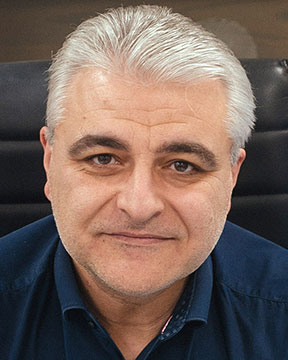

In Honor of Nobel Laureate Dr. Aaron Ciechanover


| SESSION: BiotechnologyWedPM1-R9 |
International Symposium on Biotechnology for Nutrition, Health and Sustainability |
| Wed. 19 Nov. 2025 / Room: Benjarong Main Rest | |
| Session Chairs: Gabriela Araujo Gois; Dario Caro; Student Monitors: TBA | |
The discovery of the ubiquitin-26S proteasome pathway fundamentally transformed our understanding of intracellular protein degradation. While this system remains central to proteostasis, it is now evident that the 20S core proteasome also functions autonomously, independently of ubiquitin and ATP. Given that nearly half of all cellular proteasomes exist as free 20S complexes, this mode of degradation is far from rare—yet its mechanisms and biological significance are only beginning to emerge.
In this talk, I will present our recent findings that illuminate the distinct roles of the 20S proteasome. Through systematic substrate profiling, we identified endogenous targets enriched in RNA- and DNA-binding proteins with intrinsically disordered regions, many localized to the nucleus and stress granules [1]. We also discovered a new class of modulators, which we term Catalytic Core Regulators (CCRs), that selectively tune 20S proteasomal activity [2,3]. Extending these insights beyond the cell, we characterized the circulating 20S proteasome in blood [4]. This uncapped complex displays unique post-translational modifications, enhanced caspase-like activity, and enrichment in immunoproteasome subunits—hallmarks of adaptation to extracellular conditions. Together, our studies redefine the 20S proteasome as a versatile and autonomous degradation system, essential for safeguarding proteostasis across both intracellular and extracellular environments, with broad implications for stress adaptation, immune function, and disease.