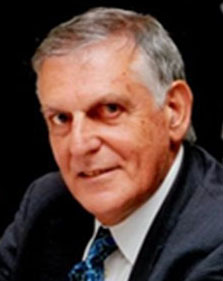

In Honor of Nobel Laureate Dr. Aaron Ciechanover


| SESSION: GeochemistryTuePM1-R5 |
Dutrow International Symposium (4th Intl. Symp. on Geochemistry for Sustainable Development) |
| Tue. 18 Nov. 2025 / Room: Orchid | |
| Session Chairs: Nancy Ross; Basilios Tsikouras; Student Monitors: TBA | |
The rare-earth elements, comprising the lanthanides (La-Lu) plus scandium and yttrium, exhibit unique structural chemistry characterized by large ionic radii, high coordination numbers, and distinctive electronic configurations. The systematic decrease in ionic radius across the lanthanide series, known as lanthanide contraction, provides an opportunity to study structure-property relationships in crystal chemistry. In this study, the structural parameters across major rare-earth compound families are examined, including rare-earth sesquioxides, phosphates, garnets and perovskites focusing on how geometric constraints and ionic size effects dictate crystal structure preferences. The profound impact of lanthanide contraction on structural chemistry is demonstrated. Key findings include predictable trends in bond lengths, coordination numbers, and polymorphic transitions that correlate directly with ionic radius changes from La³⁺ to Lu³⁺. Distortion parameters increase systematically with lanthanide contraction, affecting optical and magnetic properties. These systematic trends demonstrate the power of comparative structural analysis in understanding and predicting rare-earth compound behavior. These quantitative structure-property relationships provide valuable tools for materials design and property optimization.