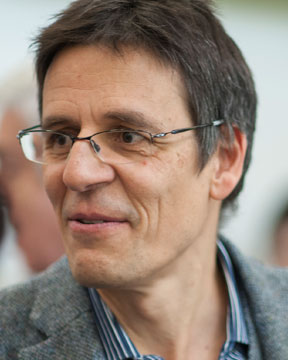

In Honor of Nobel Laureate Dr. Aaron Ciechanover



| SESSION: CarbonThuPM1-R7 |
8th Intl. Symp. on Sustainable Carbon and Biocoke and their Industrial Application |
| Thu. 20 Nov. 2025 / Room: Lotus | |
| Session Chairs: Paulo Assis; Philip Aster; Student Monitors: TBA | |
Carbon produced via methane pyrolysis in metallic melts represents a promising sustainable alternative to conventional graphite. This material combines a CO₂-reduced production pathway with physical and chemical properties that can be tailored for high-performance applications. Due to the presence of metallic residues (e.g., Cu, Fe, Sn) introduced during the pyrolysis process, a comprehensive analytical approach is required to evaluate its structural integrity, purity, and functionality [1].
This study presents a multimodal characterization strategy combining Raman spectroscopy, scanning electron microscopy (SEM), and X-ray fluorescence analysis (XRF). Raman spectroscopy provides detailed insights into carbon bonding states, crystallinity, and defect density, particularly through the evaluation of D-, G-, and 2D-bands. SEM imaging enables morphological analysis, surface topology assessment, and particle size evaluation at sub-micrometer resolution. XRF complements these methods by quantifying trace metallic impurities originating from the melt environment, which may influence subsequent material processing and application behavior [2,3].
The obtained results serve as a basis for targeted purification and refinement processes that enable the use of pyrolysis-derived carbon as a functional material across a wide range of applications. Potential use cases include bipolar plates for fuel cells, anode materials for lithium-ion batteries, electrically conductive polymers, expandable flame-retardant fillers, lubricants, and electrodes for electric arc furnaces. The unique combination of graphite-like properties with a sustainable synthesis route addresses the increasing industrial demand for environmentally friendly high-performance materials. A central challenge remains the precise adjustment of material characteristics to meet specific performance requirements in each application sector [4–6].