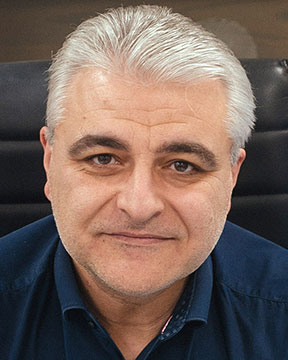

In Honor of Nobel Laureate Dr. Aaron Ciechanover



| SESSION: GeomechanicsThuPM1-R5 |
5th Intl Symp on Geomechanics & Applications for Sustainable Development |
| Thu. 20 Nov. 2025 / Room: Orchid | |
| Session Chairs: Jili Qu; Student Monitors: TBA | |
This paper investigates the feasibility of bio-stimulation for sand fixation and dust prevention[1] in the Taklimakan Desert region. Field-scale tests were conducted on man-made cone dune and trapezoidal sandy structure[2]. A specialized stimulation solution and a cementation solution were applied to both soil structures according to a prescribed spraying method and frequency[3]. Following treatment, the surface bearing capacity, crust thickness, and wind erosion resistance of the specimens were assessed. Additionally, the microstructural and compositional changes of the samples before and after treatment were analyzed. The results indicated that the bio-stimulation method significantly enhances the bearing capacity and wind erosion resistance of desert soil by forming a crust on its surface layer. Considering time and cost factors, D(1+1) or T(1+1) processing may represent the most effective scheme for future large-scale applications. Microscopic tests (SEM, EDS) further confirmed the microbial curing mechanism, revealing that as the number of sprays increases, the calcium content and strength of the soil also increase. Moreover, a positive correlation was observed between the solidification strength of desert soil and crust thickness[4]. This conclusion provides a reliable foundation for implementing sand fixation and dust prevention strategies, mitigating sandstorms, and improving climatic conditions in the Taklimakan region in the future.