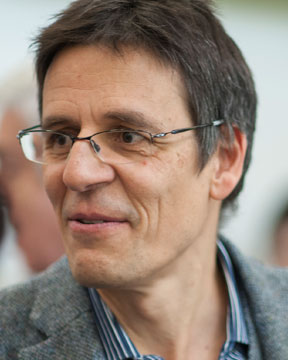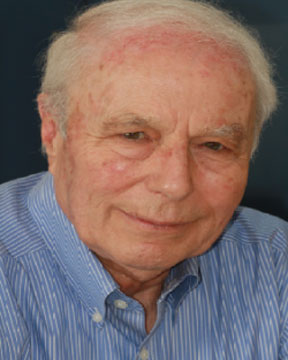

In Honor of Nobel Laureate Dr. Aaron Ciechanover



| SESSION: AdvancedMaterialsWedPM2-R6 |
9th Intl Symposium on New & Advanced Materials and Technologies for Energy, Environment, Health and Sustainable Development |
| Wed. 19 Nov. 2025 / Room: Jasmin | |
| Session Chairs: Meng-Hsin Chen; Jui-Cho Yang; Student Monitors: TBA | |
The use of metals as activators for sintering cubic boron nitride has certain advantages because it lowers the activation barriers between the components or makes the process partially liquid-phase, thereby creating a porous material [1]. Also, very importantly, chemical interaction occurs that promotes the consolidation of cBN grains both with each other and with reaction products. Among the classical metals used to create cBN polycrystals, Al and Co, Ni & Al combinations in amounts of 1-5 % by weight should be noted [2]. The addition of refractory Co also contributes to the crack resistance of cBN ceramics.
In this work, which was carried out under Contract No. 5.9/25-П(2) with the National Academy of Sciences of Ukraine, we made the first attempt to use heat-resistant Hf as an additive to cBN ceramics of the BL- group in order to observe the behavior of refractory metals for this type of tool ceramics. As a base system, we used a cBN-HfC composition that corresponds to the composition of the BL- group, in which we have already produced high-quality cutting inserts with a diameter of 9.52 mm. The starting mixture for sintering was a homogeneous charge of cBN-HfC-Hf composition (60:37:3 % by volume) with an average grain size in the range of 1-3 μm. The HPHT sintering of the charge, which was previously subjected to vacuum degassing, was carried out in a toroidal high-pressure apparatus at a temperature of 2250-2300 °C and a pressure of 8 GPa, the sintering time was 60 seconds. As a result of high pressure and temperature, superhard ceramics of the BL group were formed with a homogeneous microstructure, which included cBN grains, HfC in a practically unchanged morphological form, and newly formed fine-grained HfB2 in amounts up to 8 % by volume, which is evenly distributed in the cBN-HfC matrix (three-phase ceramics). No residues of metallic hafnium could be detected by XRD. The hafnium boride with lattice parameters a = 0.3130 nm, c = 0.3458 nm has a dual origin due to the interaction of cBN with hafnium carbide and direct contact interaction with the metal itself. Since the formation of HfCN was not observed, we assume the displacement of N2 from the reaction zone as a consequence of chemical transformations to balance the system. Given the fact that the Tmp. of hafnium is 2233 oC at atmospheric pressure, and high pressure only increases it, chemical reactions occur in the system at temperatures close to melting or by solid-phase transformations. The newly created ceramics are highly modular and superhard (HV = 33 GPa), which can be used to make cutting inserts with a diameter of 6.35 to 12.7 mm with a sharp cutting edge, suitable for metalworking hardened steels. Using the developed methodology with metal-containing components, the authors plan to use refractory high-entropy alloys as an effective additive for the sintering of cBN ceramics of the BL group for tooling purposes.