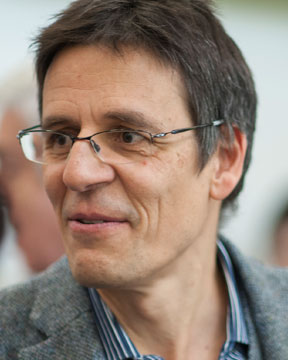
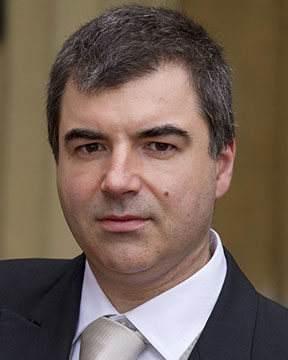
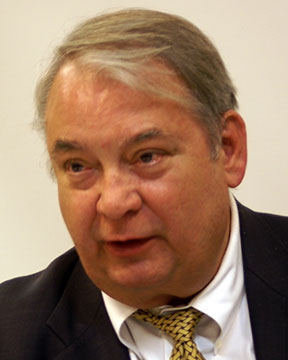
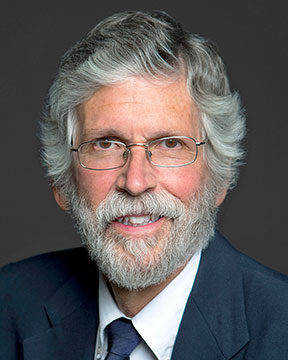
FINDING AND MEASURING THE 11TH R: TRANSCENDING THE CIRCULAR TO THE REGENERATIVE ECONOMYNorman Dytianquin1; Simon Paindavoine2; Leonard Thoma3
1Zuyd University of Applied Sciences, Maastricht, Netherlands; 2SKEMA Business School, Lille, France; 3Technical University of Applied Sciences, Wuerzburg-Schweinfurt, GermanyPAPER: 186/Economy/Keynote (Oral) OL
SCHEDULED: 14:25/Tue. 18 Nov. 2025/Benjarong-Phuket
ABSTRACT:As an emerging concept in economics and business, regeneration straddles the blurred lines between allied concepts of sustainability and the circular economy. Whereas sustainability is about the balance of the so-called triple bottom line, and whilst circularity progresses a step further by looping back waste as inputs to the production process, the regenerative economy and business models promote ecological integrity by ensuring planetary provisions and societal wellness. This is done through its replenishment or restorative or rebuilding function. Replenish means to fill again what has been used up, restore is to put or bring back to an original state while rebuild is to reconstruct something that has been damaged or destroyed. The latter two terms of restoring and rebuilding have common elements though with the other Rs of the circular economy such as repairing, refurbishing, or remanufacturing, where some form of restoration and rebuilding transpires. Replenishment therefore is the more appropriate eleventh R added to the 10 Rs of the circular economy comprising Refuse, Rethink, Reduce, Reuse, Repair, Refurbish, Remanufacture, Repurpose, Recycle and Recover introduced by Potting & Hanemaaijer (2018).
The need to replenish resources is crucial due to the limits on production imposed by the earth’s carrying capacity. In ecological terms, carrying capacity is defined as the maximum number of a species that can sustainably live or thrive in a given area. In other words, a population’s carrying capacity is the size at which a population can no longer grow due to the lack of supporting resources. The carrying capacity is defined as the environment's maximal load, which in population studies correspond to the population equilibrium, when the number of deaths in a population equals the number of births (including immigration and emigration). Hence, it is imperative to transcend circularity that reduces waste to regeneration that warrants that the planet’s carrying capacity is not breached.
As for regenerative business, this paper uses the concept of business models with respect to the elements of a business model proposed by Richardson (2008), Teece (2010), and Osterwalder & Pigneur (2005, 2011) comprising value proposition (marketing), value creation (R&D and production), value delivery (supply chain and logistics) and value capture (finance). The sustainability dimension to business models were introduced by Bocken et al. (2014) with eight archetypes classified into three groupings of mechanisms and later expanded on by Clinton and Whisnant (2014) with 20 distinct sustainable business models grouped into five categories, and Toth (2019) with 15 sustainable business movements. Using this conceptual framework, this research introduces a new typology of regenerative business models, circular production and circular consumption business models and will use a qualitative approach of selected case studies of regenerative business models juxtaposed with the circular business models to showcase the differences using environmental, social, and economic indicators. The case studies of 54 enterprises cover two highly polluting sectors —fashion and construction — in three countries, namely, the Netherlands, France, and Germany, which are among the top EU polluters in both sectors. The methodology involves scoring the case companies using multi-criteria decision analysis (MCDA) where the sustainability indicators serve as criteria to produce an overall triple bottom line (TBL) score (for people planet and profit) following Elkington (1994) that represents balanced sustainability. Each of the elements of the business models from value proposition, value creation, value delivery and value capture will be scored on the indicators for the three dimensions of sustainability.
A conclusion on the benefits of regenerative versus circular economy business models in terms of the triple bottom line will be made with some policy implications drawn, using lessons learned from the case studies including improvements in materiality indicators needed to measure the concept of regeneration. Overall, regenerative business models reveal more balanced sustainability in almost all case companies compared to circular models due to value creation across the entire chain from upstream suppliers to downstream consumers.
[1] Bocken, N., Short, SW., Rana, P. & Evans, S. (2014). A literature and practice review to develop sustainable business model archetypes. Journal of Cleaner Production 65: 42-56. Elsevier. http://dx.doi.org/10.1016/j.jclepro.2013.11.039.
[2] Bocken, N. & Short, S. (2016). Towards a sufficiency-driven business model: Experiences and opportunities. Environmental Innovation and Societal Transitions 18: 41-61, Elsevier.
[3] Bocken, N. & Short, S. (2021). Unsustainable business models ―Recognizing and resolving institutionalized social and environmental harm. Journal of Cleaner Production 312 (1): 127828.
[4] Braungart, M. & McDonough, W. (2002). Cradle to Cradle: Remaking the Way We Make Things. North Point Press, New York, 208 pages.
[5] Capital Institute (2023). Eight Principles of a Regenerative Economy. Downloaded from https://capitalinstitute.org/ on 8 July 2024.
[6] Christian-Wahl, D. (2017). Towards a Regenerative Economy. Age of Awareness. Downloaded from https://medium.com on 10 July 2024.
[7] Christian-Wahl, D. (2021). Circular Economies and Regenerative Cultures. Age of Awareness. downloaded from https://medium.com on 10 July 2024.
[8] Circulab (2024). Regenerative and circular economy, what is it? Downloaded from https://circulab.com/regenerative-economy-definition/ on 10 July 2024.
[9] Clugston, R. (2011). Ethical Framework for a Sustainable World: Earth Charter Plus 10 Conference and Follow up. ESD Happenings Reports, Vol. 5(2): 173-176. SAGE Publications.
[10] East, M. (2020). The Transition from Sustainable to Regenerative Development. Ecocycles 6(1): 106-109. Downloaded from https://www.ecocycles.net/ojs/index.php/ecocycles/article/view/168.
[11] Fath, B., Fiscus, D., Goerner, S., Berea, A. & Ulanowicz, R. (2023). Global Transitions 1: 15-27. Elsevier. https://doi.org/10.1016/j.glt.2019.02.002.
[12] Haanaes, K. (2016). Why All Businesses Should Embrace Sustainability. International institute for Management Development (IMD), November. Downloadable at www.imd.org.
[13] Konietzko. J., Das, A. & Bocken, N. (2023). Towards Regenerative Business Models: A Necessary shift? Sustainable Production and Consumption 38: 372-388, Elsevier.
[14] Lianos, T. & Pseiridis, A. (2015). Sustainable Welfare and Optimum Population Size. Environment, Development and Sustainability (19 September). Springer. http://dx.doi.org/10.1007/s10668-015- 9711-5.
[15] Mustafa, OMA & Lengyel, P. (2022). Circular Economy: A Bibliometric Mapping. Journal of Agricultural Informatics (ISSN 20610-862X) 2022, 13, 1: 36-45, doi: 10.17700/jai.2022.13.1.650.
[16] Nielsen, C. & Lund, M. (2014). An Introduction to Business Models. In Nielsen, C. & Lund M. (Eds.) The Basics of Business Models, Vol. 1, No. 1. Copenhagen: BookBoon.com/Ventus Publishing Aps.
[17] Osterwalder, A. & Pigneur, Y. (2005). Clarifying business models: origins, present and future of the concept. Communications for the Association of Information Systems 15 (May).
[18] Osterwalder, A. & Pigneur, Y. (2010). Business Model Generation: A Handbook for Visionaries, Game Changers, and Challengers. John Wiley & Sons, Hoboken, New Jersey.
[19] Potting, J. & Hanemaaijer, A., eds. (2018). Circular Economy: what we want to know and can measure - Framework and Baseline Assessment for monitoring the progress of the circular economy of the Netherlands. PBL Netherlands Environmental Assessment Agency.
[20] Richardson, J. (2008). The business model: an integrative framework for strategy execution. Strategic Change 17 (5-6), 133-144, Wiley Online.
[21] Rockström, J., and Sachs, J. D. (2013). Sustainable Development and Planetary Boundaries. High Level Panel on the Post-2015 Development Agenda. The Sustainable Development.
[22] Sphera (2021). Regenerative Design. Downloaded from https://www.spherasotenible.com on 10 May 2024.
[23] Steffen, W., Richardson, K., Rockström, J., Cornell, S., Fetzer, I., Bennett, E.M., Biggs, R., Carpenter, S.R., de Vries, W., de Wit, C.A., Folke, C., Gerten, D., Heinke, J., Mace, G.M., Persson, L.M., Ramanathan, V., Reyers, B., Sörlin, S. (2015): Planetary Boundaries: Guiding human development on a changing planet. Science Vol. 347, Issue 6223, 1259855.
[24] Teece, D. (2010). Business Models, Business Strategy and Innovation. Long Range Planning 43: 172-194. Elsevier. doi:10.1016/j.lrp.2009.07.003.
[25] Toth, G. (2019). Circular Economy and its Comparison with 14 Other Business Sustainability Movements. Resources 2019, 8, 159, doi:10.3390/resources8040159.
[26] Wetzel, K.R. & Wetzel, J. F. (1994). Sizing the Earth: recognition of economic carrying capacity. Ecological Economics 12: 13-21.
[27] World Commission on Environment and Development. (1987). Report of the World Commission on Environment and Development: Our Common Future. UN Documents: Gathering a Body of Global Agreements.