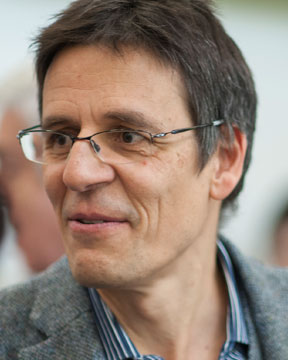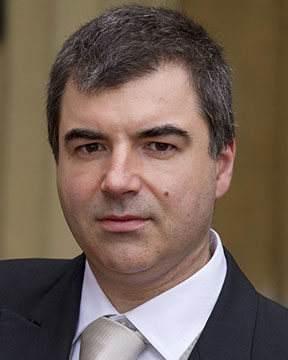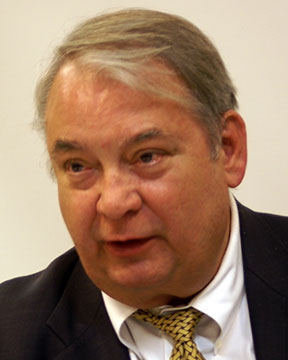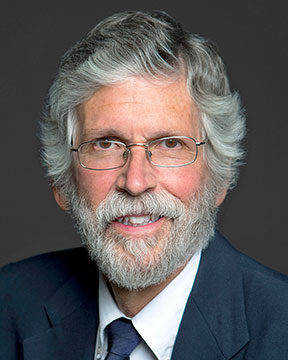

In Honor of Nobel Laureate Dr. Aaron Ciechanover

In the era dominated by digital platforms, knowledge workers and companies grapple with challenges concerning the value of their work, copyright, distribution, and authorship. Urgent questions arise regarding the devaluation of human creative work through AI interventions and the lack of harmonization in the meaning of authorship under copyright laws across differing jurisdictions. How do existing legal frameworks adapt to the nuances of AI-generated content, and to what extent do they safeguard the integrity and dignity of human-authored works and value? As AI contributes to the creative processes of individuals and organisations, who holds authorship and subsequently ownership in AI generative works, and how can this be reconciled with traditional notions of creativity and intellectual property? What do we understand by creativity in a work environment where artificial and human intelligence are increasingly integrated. This paper responds to these inquiries.
The paper introduces a new idea for a sui generis right in generative AI works and how such a right could be operationalised in copyright law. Also, the paper looks at the different actors who may hold ownership from users of AI platforms to developers, and legal persons through works made for hire or in the course of employment. The paper completes an in-depth analysis of legislative forums and regulatory frameworks related to AI, copyright, and authorship within the UK, EU, and US. The methodology is doctrinal, comparative, and socio-legal for assessing the effectiveness of copyright/competition regulations in relation to AI, identifying gaps, and proposing solutions.
Also, the paper explores the significant implication for the training of AI applications: During the process of creating and training an AI application, if copyright-protected works as well as copyright-free works in the public domain are used in the process of training generative AI, copyright infringement in derivative or transformative works could arise and this could be classed as infringing in several jurisdictions despite fair use or fair dealing as exceptions to copyright being in place.
The paper concludes by posing the question of whether current copyright laws in the UK, EU, and the US have now become redundant in the era of AI, blockchain and SMART contracts—is current jurisprudence sufficient to meet the challenge of user generated works or are end user derivative and transformative works smashing through the copyright ceiling? Is there a need for a completely new sui generis right for works created entirely by generative AI where no human has facilitated the work? In answering these questions, the Author will be drawing from his own recently funded UK Arts and Humanities Research Council research on copyright in the digital domain.