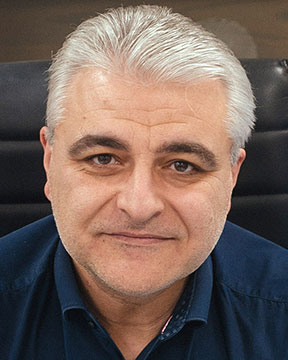

In Honor of Nobel Laureate Dr. Aaron Ciechanover

Ferromagnetic nanosystems represent a transformative frontier in biomedicine, leveraging their unique magnetic properties for diverse therapeutic and diagnostic applications. This paper explores two groundbreaking phenomena—magnetic hyperthermia and magnetically activated adenosine triphosphate (ATP) reactions—to elucidate the role of iron and manganese oxide nanosystems in enhancing electrodynamical and biothermophysical processes.
In magnetic hyperthermia, ferromagnetic nanoparticles (e.g., Fe₃O₄, MnO₂) are engineered to generate localized heat under alternating magnetic fields (AMF), enabling targeted cancer cell destruction while minimizing damage to healthy tissues. Key challenges, such as optimizing the specific absorption rate (SAR) and mitigating eddy current effects, are discussed alongside advances in self-regulating nanomaterials with controlled Curie temperatures (e.g., Ni/C and La₁₋ₓAgₓMnO₃ nanocomposites).
Parallelly, the paper investigates ATP activation via magnetic impurities (Fe²⁺, Mn²⁺), employing vibrational spectroscopy (Raman/IR) to probe how these ions modulate ATP hydrolysis kinetics and energy transfer mechanisms. The interplay between magnetic nanoparticles and ATPase-driven phosphorylation reactions is analyzed, offering insights into cellular energy manipulation and potential therapeutic applications.
By bridging material science, biophysics, and clinical innovation, this work underscores the potential of ferromagnetic nanosystems to revolutionize oncology and bioenergetics, while highlighting future directions for low-toxicity, high-efficiency nanotherapies.