
In Honor of Nobel Laureate Dr. Aaron Ciechanover


 |
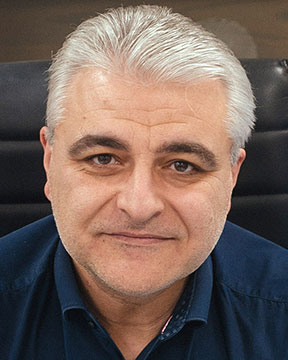
Dr. Tetiana PrikhnaV. Bakul Institute for Superhard Materials of the National Academy of Sciences of UkraineAblation Stability And Mechanical Characteristics Of Hfb2–sic Ultra High Temperature Composites 9th Intl Symposium on New & Advanced Materials and Technologies for Energy, Environment, Health and Sustainable Development Back to Plenary Lectures » |
Abstract:The effect of additions of SiC additives to HfB2 and the physical-chemical characteristics of the additives on the structure and the properties of HfB2-SiC composites were investigated. Studies of the resistance to ablation in air of hot-pressed HfB2 and HfB2-SiC samples heated by a gas burner showed that HfB2 ceramics with the addition of 30 mass.% SiC with average grain sizes of 30-50 μm. have significantly higher thermal resistance – up to temperatures of 2766 and 2780 °C, respectively (mass loss of 0.25 mg/s) than HfB2 ceramics without additives, samples of which cracked already at 1870 °C. The SiC powders had fragmented grains with sharp edges with approximate average stoichiometry SiC1.6O0.1, and 6_H SiC structure, and 5-10 μm (single-crystal grains with a hypercubic shape, close to spherical, practically free of impurities, with approximate stoichiometry SiC1.5, b-SiC). The formation of a framework from SiC when 40% SiC was added resulted in decrease of resistance to ablation (the material cracked at low temperature), of microhardness, fracture toughness, and Young's modulus. The composite made from a mixture of HfB2 - 30 mass.% b-SiC (5-10 μm) by hot pressing under a pressure of 30 MPa, 1950 °C for 30 min with a specific gravity of 6.54 g/cm3 demonstrated the highest Vickers microhardness HV(9.8 N)=38.6±2.5 GPa and fracture toughness, K1c(9.8 N)=7.7 ± 0.9 MPa m0.5, Young's modulus 510 GPa. The additions of SiC_6H with sharp fragment grains of 1 μm in size with a lamellar or strongly elongated in one direction grains, with an approximate stoichiometry of SiC4.6O0.75 or 3-10 μm with an approximate stoichiometry of SiC2.3O0.25 added in the same amount (30 wt.%) lead to cracking of the HfB2-SiC composites during heating in air at a temperature of 1787 and 1455 °C, respectively. The HfB2-SiC composites which successfully passed the ablation test contained somewhat less admixture oxygen in their structures and were fabricated from SiC powders with negligible oxygen content and stoichiometry close to SiC1.5-1.6. |
|