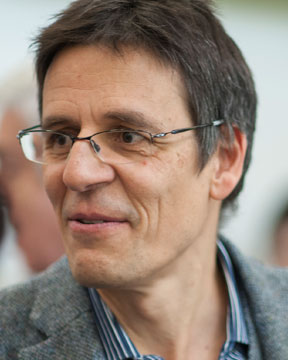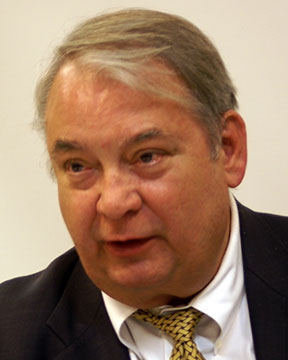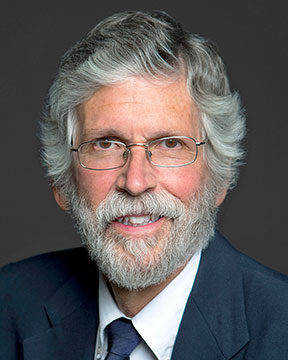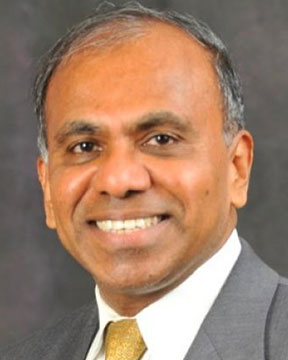

In Honor and Memory of Nobel Laureate Dr. Rudy Marcus
(Passed away on July 16, 2026)
(To Be Updated)
(Passed away on July 16, 2026)
(To Be Updated)


 |
Ms. Brenda Radmacher, MA, JDSeyfarth Shaw LLPBeyond Shuttle Diplomacy: Advanced Mediation Strategies For Complex International Construction And Multi-party Disputes — Toward Sustainable Dispute Resolution For Global Infrastructure Projects Lee Jay Berman International Symposium (6th Intl. Symp. on Law & its Applications for Sustainable Development) Back to Plenary Lectures » |
Abstract:Mediation has become the dominant form of alternative dispute resolution in commercial and construction litigation across both domestic and international forums, yet resolution rates in complex, multi-party cases consistently lag behind those in simpler bilateral disputes. International construction disputes present uniquely challenging conditions for mediation: multiple parties with overlapping and cross-cutting interests, deep technical complexity spanning engineering, scheduling, and cost disciplines, layered contractual relationships, cross-border regulatory and cultural differences, competing legal traditions (common law, civil law, and hybrid systems), multilingual communication barriers, and high financial stakes compounded by ongoing project impacts and, increasingly, by sustainability mandates embedded in project financing, host-country regulation, and multilateral development bank requirements. Despite these distinctive characteristics, practitioners frequently apply standard mediation techniques developed for simple, bilateral, single-jurisdiction disputes without meaningful adaptation, producing suboptimal outcomes or outright impasse. The resulting outcomes include additional costs when measured against the environmental and social timelines that sustainable infrastructure projects cannot afford to lose. This proposed session advances the proposition that complex international construction disputes require a fundamentally different mediation framework than conventional approaches provide. The primary goals are to: (1) identify the structural and behavioral barriers (including those unique to cross-border and cross-cultural settings) that cause traditional mediation to fail in complex cases; (2) present an integrated framework of pre-mediation process design, valuation methodology, and advanced technique selection that accounts for divergent legal traditions, international arbitration interplay (particularly FIDIC and ICC frameworks), and sustainability-linked contractual obligations; (3) equip advocates and neutrals with differentiated strategies that improve resolution rates and the quality of mediated outcomes in high-stakes matters; and (4) demonstrate how mediation process design can itself advance sustainable development objectives by reducing the resource consumption, carbon footprint, and social disruption associated with protracted international construction disputes, and by preserving ongoing commercial relationships essential to long-term sustainable infrastructure delivery. The analysis draws on established behavioral economics literature to identify cognitive biases, including anchoring, reactive devaluation, loss aversion, and the endowment effect, that systematically impede negotiated resolution, with particular attention to how these biases manifest differently across cultural contexts (e.g., collectivist versus individualist negotiation norms, face-saving dynamics in Asian and Middle Eastern construction markets, and differing attitudes toward adversarial process in civil-law jurisdictions). In addition, negotiation theory and dispute resolution process design principles will be discussed and used to construct a staged framework organized around three phases: pre-mediation preparation, in-session technique deployment, and impasse intervention. Practical frameworks are developed for multi-party allocation, contingent agreement design, and hybrid process selection, including Med-Arb and early neutral evaluation, as well as tiered dispute resolution clauses common in international EPC and PPP contracts. The topic further introduces a "sustainable mediation" analytical lens, evaluating process choices against three sustainability metrics: (a) resource efficiency (time, cost, and carbon expenditure of the dispute resolution process itself); (b) relationship preservation (maintaining the collaborative networks necessary for long-term infrastructure operation and maintenance); and (c) outcome durability (designing settlements that incorporate adaptive mechanisms for evolving environmental and regulatory requirements, such as ESG compliance milestones and climate-resilience standards). Effective mediation of complex international construction disputes depends on decisions made well before the mediation session begins. Pre-mediation engagement (including structured information exchange, early mediator involvement in process design, cross-cultural protocol alignment, selection of seat and language of mediation, and deliberate decision-maker preparation that accounts for varying levels of settlement authority across jurisdictions and corporate governance structures) accounts for the majority of mediation success or failure. Within the session, impasse is most effectively addressed through a diagnostic approach distinguishing informational, emotional, structural, principal-agent, cultural, and strategic impasse, each requiring distinct interventions. In international settings, cultural impasse may frequently be misdiagnosed as strategic or emotional impasse, leading to counterproductive interventions. Strategies of moving beyond impasse will be discussed including mediator proposals, bracketed negotiation, and linked settlement architectures. These settlement architectures will be examined in cross-border disputes to offer the additional advantage of enabling sustainable and durable resolutions. Practitioners who approach mediation as a designed process rather than a facilitated conversation achieve measurably better outcomes — outcomes that, when designed with sustainability in mind, also advance the broader policy objectives of the international development and infrastructure communities. |
|