
In Honor and Memory of Nobel Laureate Dr. Rudy Marcus
(Passed away on July 16, 2026)
(To Be Updated)
(Passed away on July 16, 2026)
(To Be Updated)



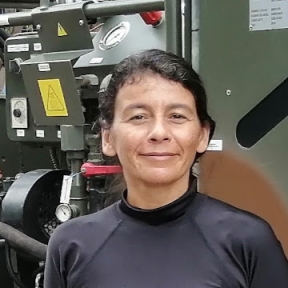 |
Dr. Corinne ArrouvelUFRJMapping Geological Hydrogen: A Carbon-free Energy And A Clean Feedstock For The Fertilizer Industry Sirbescu International Symposium (5th Intl. Symp. on Geochemistry for Sustainable Development) Back to Plenary Lectures » |
Abstract:With climate change, oil crises from wars in Ukraine, Russia, Iran and lack of fertilizer industries in Brazil, there is an urgent need to use hydrogen as a substitute to carbon-based fuels and as a clean feedstock. However, even if hydrogen is a fruitful growing market, its production controlled by the oil industry is not clean (mainly obtained from steam methane reforming), and it is expensive if obtained by electrolysis. Since the last five years, natural H2 (also called white hydrogen, geological hydrogen, primitive hydrogen, gold hydrogen) has been gaining interest. A growing number of reservoirs are being discovered around the world, usually by chance (e.g., Mali, France, Albania) and some exploration programs are underway. (e.g., Australia). Brazil has recently recorded the highest level of geological hydrogen at the subsurface [1]. The present keynote will review the most advanced researches on natural hydrogen systems. More specifically, will be explained the different processes of hydrogen formation, the accumulation and stability of hydrogen in reservoirs. Nowadays, hydrogen exploration is mainly conducted through the monitoring of hydrogen emissions, considering different geological contexts. The search of new reservoirs integrated advanced rock physics and geochemistry with multi-scale modelling to transform raw geophysical and geochemical data into dynamic digital models capable of predicting the generation and migration of natural hydrogen through faults, fractures and/or fairy circles. Geological hydrogen is estimated to supply the world energy demand and would contribute to climate change mitigation through the transition to a low-carbon economy. To enable hydrogen exploration locally and its exportation, it is only possible with the modification of laws. Australia became a leading country concerning investments and exploration, while Brazil maintains a strong economy based on fossil fuels in priority and invests in electrolysis and carbon capture processes (green and blue hydrogen). |
|