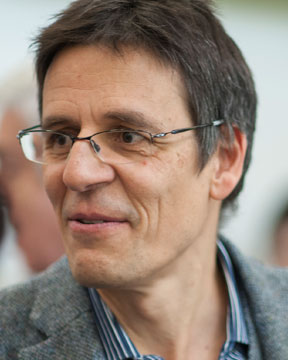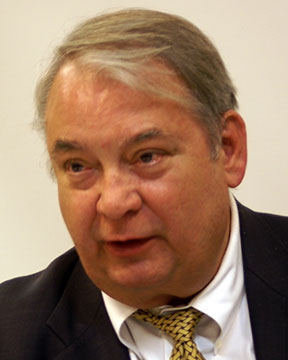

In Honor and Memory of Nobel Laureate Dr. Rudy Marcus
(Passed away on July 16, 2026)
(To Be Updated)
(Passed away on July 16, 2026)
(To Be Updated)




 |
Dr. Ali RazbanPurdue UniversityAccurate Indoor Occupancy Forecasting Using Optimized Sensor Placement Pellanda International Symposium (11th Intl. Symp. on Sustainable Energy Production: Fossil; Renewables; Nuclear; Waste handling, processing, & storage for all energy production technologies; Energy conservation) Back to Plenary Lectures » |
Abstract:Occupancy is a key factor influencing HVAC energy consumption and indoor thermal comfort in commercial buildings. However, most HVAC systems continue to operate on fixed schedules that do not accurately reflect actual space utilization, resulting in unnecessary energy consumption. This research presents a comprehensive framework for predicting occupancy levels using environmental sensor data and machine learning techniques. The experimental setup included indoor CO₂, temperature, humidity, and outdoor weather sensors, while manually recorded occupancy data served as the ground truth. The effects of sensor placement and response latency on CO₂ concentration measurements were investigated and validated through three case studies. Seven machine learning models were evaluated, including Linear Regression, Decision Tree, Random Forest, Support Vector Machine, Gaussian Process Regression, Artificial Neural Network, and Long Short-Term Memory (LSTM). Among these models, LSTM achieved the highest prediction accuracy, with an RMSE of 2.72 and an R² of 0.98, owing to its ability to capture temporal dependencies in environmental data. Furthermore, the sensor placement analysis showed that ceiling-mounted CO₂ sensors, although exhibiting slower response times, produced more stable and representative measurements than wall-mounted sensors. The proposed framework demonstrates the effectiveness of indirect environmental sensing combined with time-aware machine learning for accurate, real-time occupancy prediction, providing a practical foundation for occupancy-driven HVAC control and improved building energy efficiency. |
|