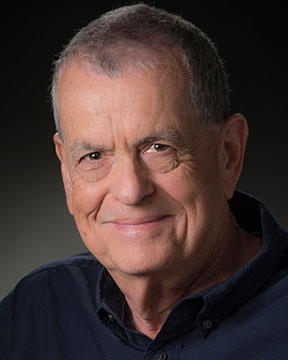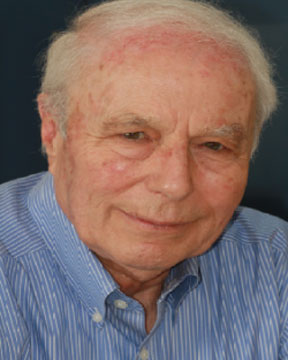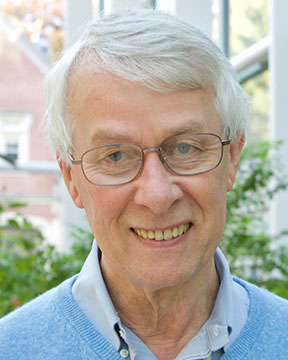

In Honor and Memory of Nobel Laureate Dr. Rudy Marcus
(Passed away on July 16, 2026)
(To Be Updated)
(Passed away on July 16, 2026)
(To Be Updated)




 |
Dr. Brenda FryeUniversity of ArizonaGravitational Lensing And The Discovery Of Supernova "h0pe" Frye International Symposium (Intl. Symp. on Astrophysics) Back to Plenary Lectures » |
Abstract:Einstein correctly predicted that mass (the 'lens') bends light around it. The largest lens is a galaxy cluster, which consists of up to hundreds of galaxies and a dominant dark matter component. A cluster lens magnifies a single galaxy image in the background into a larger and brighter version of itself called an "arc." For certain fortuitous lensing geometries, a single galaxy image can also be photocopied into multiple locations into an "image system." Much of my career was spent studying these massive gravitational lenses. Benefitting from the lensing effect, I have discovered some of the first image systems that extend back to when the universe was less than one billion years old, enabling detailed studies of objects in the distant universe. By taking advantage of the high lensing magnification factors, the impacts of star formation within the lensed galaxies were quantified, and at a spatial resolution that cannot be achieved in any other way. Maps of the distribution of the dark matter in the lens were also constructed for several galaxy cluster lenses for the first time. In 2023, just one year after the launch of the James Webb Space Telescope (JWST), I discovered an exploding star or "supernova" that is situated behind a galaxy cluster lens and is also of known intrinsic brightness, called "SN H0pe". As a result of the lensing effect, light from this single supernova appeared in three different locations, each one depicting the supernova at a different snapshot in time during the explosion. The difference in the arrival time of the photons to each of these locations, combined with other information obtained by the observations, yielded a value for the current rate of expansion of the universe, called the "Hubble" constant. Differences have arisen between the late-time and early-time values for the Hubble constant that raise doubts about its validity. This "Hubble tension" has become one of the most important questions in the field of Cosmology. The late-time measurement of the Hubble constant from SN H0pe is impactful for offering an independent measurement that can elucidate this Hubble tension. This experiment to measure the Hubble constant for SN H0pe was carried out successfully for only the second time in history, and for the first time using a Type Ia supernova. This work is leading to a better understanding of this fundamental parameter that describes our universe. |
|