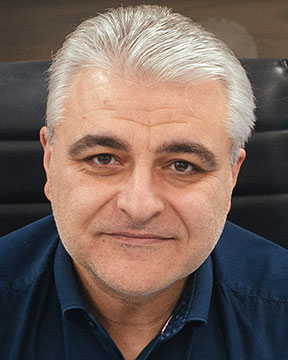

In Honor and Memory of Nobel Laureate Dr. Rudy Marcus
(Passed away on July 16, 2026)
(To Be Updated)
(Passed away on July 16, 2026)
(To Be Updated)



 |
Dr. Wenlei ChenOklahoma State UniversitySn 2022ret At Z=2.56: Extending Type Ia Supernova Cosmology With Jwst Frye International Symposium (Intl. Symp. on Astrophysics) Back to Plenary Lectures » |
Abstract:Type Ia supernovae—the thermonuclear explosions of white dwarfs—can be standardized as cosmic distance markers and have played a central role in revealing the accelerated expansion of the Universe. Until recently, however, spectroscopically confirming these events beyond redshift z = 2 was extraordinarily difficult. We present JWST observations of SN 2022ret, discovered in NIRISS imaging behind the Abell 2744 galaxy cluster and followed with NIRCam imaging and NIRSpec spectroscopy. Emission lines from its host galaxy establish a redshift of z = 2.56, corresponding to light emitted roughly 11 billion years ago. This makes SN 2022ret one of only four spectroscopically confirmed Type Ia supernovae at z>2. Gravitational lensing by Abell 2744 magnified the event by a factor of approximately 1.7. Although SN 2022ret was discovered after maximum light and its NIRSpec spectrum was obtained more than 60 rest-frame days after peak brightness, independent analyses of its light curves and spectrum consistently classify it as a normal Type Ia supernova. After correcting for lensing and other luminosity-related effects, its peak brightness is consistent with that of typical nearby Type Ia supernovae. Combining SN 2022ret with two other z > 2 events that satisfy conventional cosmological color criteria, together with a Cepheid-based luminosity calibration, yields H0 = 71.6 ± 3.3 km s-1 Mpc-1, intermediate between early- and late-Universe measurements. The present sample provides no statistically significant evidence for evolving or phantom dark energy. These results demonstrate JWST’s ability to transform supernovae from the Universe’s first few billion years into cosmological probes, while emphasizing the need for larger samples from future JWST, Roman, and Rubin surveys. |
|