
In Honor and Memory of Nobel Laureate Dr. Rudy Marcus
(Passed away on July 16, 2026)
(To Be Updated)
(Passed away on July 16, 2026)
(To Be Updated)


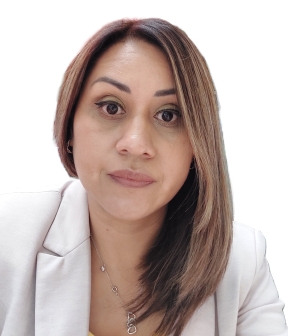 |
Dr. Tania E. Lara-CenicerosCIMAV-MexicoNanocellulose For 3d Printing Applications: Giving Added Value To Waste Advincula International Symposium (6th Intl. Symp. on Green Chemistry & Polymers & their Application for Sustainable Development) Back to Plenary Lectures » |
Abstract:Hydrocolloids and bio-inks based on nanocellulose gels have been subject of growing research interest from both industrial and academic field, since various advantages are inherent when use biopolymers for this goal such as biocompatibility, renewability, biodegradability, low toxicity and biosorption capacities among others.1 Direct Ink Writing (DIW) is classified as extrusion modeling method and is a great tool for 3D printing of several highly viscous solutions having the advantage of doing any design with high accuracy compared with the CAD model used. The obtention of nanocellulose derived from Mexican biomass has been of interest in our research group.2 Herein, we report the design of hydrocolloids and bio-inks based on nanocellulose gels obtained from Nopal (Opuntia Ficus Indica) for the 3D printing of structures. The final 3D printed aerogels were based on nanocellulose/sodium alginate NCel-AS, or adding a small amount of GO, and nanocellulose and guar gum NCel-Guar in order to use them for the design of bio-inks to be printable by DIW. The printability of the bio-inks was demonstrated by rheology studies and correlated with the accuracy in the 3D printed models, showing that the bio-inks have the necessary thixotropic behavior in order to promotes the self-construction during the layer-by-layer 3D printing process. SEM characterization showed a continuous porous material formed of randomly oriented platelets-like morphology. By XRD was possible to identify the characteristic crystalline structure of cellulose type I and type II depending of the used mercerized methodology of the nopal fibers. These lightweight aerogels-type were used as adsorbents for lead (II) ion uptake from water, and for the capture of particulate matter in air as an excellent bio-filter to trap PM 2.5 and PM 10. Furthermore, in this talk will be possible to offer an overview on the use of lignocellulosic native Mexican biomass as novel eco-friendly materials for the obtention of nanocellulose based nanocomposites which drive the valorization of cellulose-rich wastes. |
|