
In Honor and Memory of Nobel Laureate Dr. Rudy Marcus
(Passed away on July 16, 2026)
(To Be Updated)
(Passed away on July 16, 2026)
(To Be Updated)



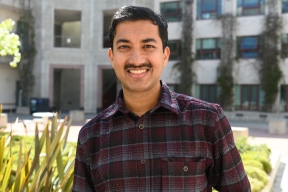 |
Dr. Saikat Chakraborty ThakurAuburn UniversityPromoting Workforce Development And Fundamental Research On Scaled Dusty And Magnetized Low Temperature Plasmas In The Magnetized Plasma Research Laboratory (mprl) At Auburn University Frye International Symposium (Intl. Symp. on Astrophysics) Back to Plenary Lectures » |
Abstract:The presence of microscopic, solid, charged particulate matter immersed in a background plasma, commonly known as “dusty” or “complex” plasmas, has been the subject of extensive research over the last four decades due to its relevance to laboratory, industry, near earth space, inter-planetary dust in our solar system, and astrophysical systems. These include both space phenomena such as noctilucent clouds, dust-tails of comets, rings of the outer planets of the solar system and affects astrophysical phenomena such as radiative transfer, thermodynamics, surface chemistry and large scale flows and dynamics of astrophysical systems at various scales. The Magnetized Plasma Research Laboratory (MPRL) at Auburn University investigates fundamental plasma and complex/dusty plasma phenomena over a large range of parameter regimes from unmagnetized plasmas to strongly magnetized plasmas. MPRL's mission is to serve as an open access, multi-user collaborative research facility for the dusty-, basic-, and fusion edge relevant plasma communities. The centerpiece of the laboratory is the Magnetized Dusty Plasma Experiment (MDPX) [1], a highly flexible plasma device with excellent diagnostic access to study the unique regime of high magnetic fields (up to 4 T), at relatively low density (~ 1014 – 1016 m-3) and low electron (Te < 5 eV) and ion temperatures (Ti < 0.05 eV). Other instruments in MPRL include ALEXIS and ALISSA, inductively and capacitively coupled plasma sources respectively to simulate space plasmas, conditions for reentrant vehicles and perform basic plasma experiments on waves and instabilities. In addition, we have a wide variety of “tabletop” scale unmagnetized, low temperature capacitively coupled plasma devices that can be adapted to the high magnetic field MDPX device. This allows us to host several external collaborators in our lab. This presentation will summarize some recent novel studies at MPRL such as pattern formation of magnetic field aligned filamentary structures at high magnetic fields [2], discuss the very rich and complex, turbulent-like dynamics associated with the formation of these magnetic field aligned filamentary structures [3] and finally show how microscopic, charged dust particles can be used as a diagnostic [4] to reveal the electrostatic nature of these filamentary structures. In addition, we would like to showcase the workforce development aspects of MPRL, where we not only train our own undergraduate and graduate students in research, but also actively work with and encourage research by undergraduate and graduate students of our external collaborators. Recently, we have formed the Strategic Plasma Innovation Network (SPI-NET), which is a consortium of institutions that can engage in fundamental plasma science research with a focus on processes that lead to self-organization and pattern formation in magnetized plasmas and dusty plasma and with a goal to grow the plasma science workforce. We aim to provide resources such as free academic consultation, time limited access to our devices in MPRL and minimal travel awards to try to lower the entry barrier for researchers across all levels of academics. |
|