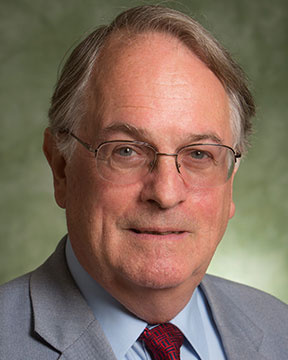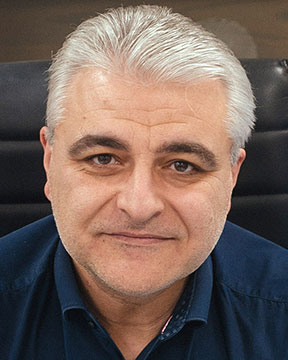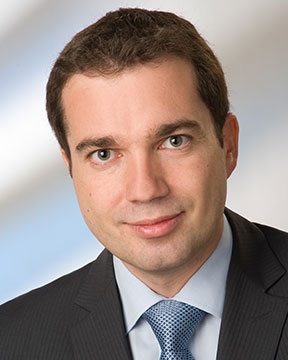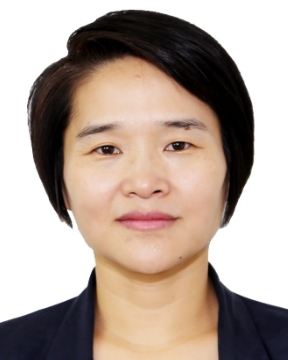
Michael Stelter, born in 1956, studied chemistry at the University Darmstadt, including chemical technology. After his Diploma Thesis he worked at the university for his Ph.D. in the field of intermetallic compounds and crystal structure analysis, awarding his Ph.D as Dr.-Ing. in 1987. His industrial career started at Norddeutsche Affinerie (NA) (now Aurubis) in Hamburg, becoming soon deputy director of the R&D department. During this time, among other things, he developed new highly innovative processes for the production of copper chemicals and for waste water treatment, both international patented. From 1992 until 1994 additionally he was appointed to the board of directors of Transvaal Alloys Pty., South Africa, a subsidiary of NA. From 1994 to 1997 he moved from metallurgy to recycling, into the fields of electro-plating, recycling technologies of process water and closed circuits developing new industrial processed applying membrane technology first time in this field.
1997 he was appointed Full Professor and director of the institute for Nonferrous Metallurgy and Purest Materials of TU Bergakademie Freiberg, the oldest academic institution for mining and metallurgy worldwide, as professor for "Technology of Nonferrous Metals and Materials Recycling".
Because of his expertise he was appointed as Main Technical Consultant of Expert Services for the “German Federal Ministry for Education and Research” (BMBF) in the domain of environmental protection technology.
Twice he became elected as Vice-Rector of TU Bergakademie Freiberg, from 2000 - 2003 as vice-rector for Education and Structural Development, later from 2010 - 2013 as vice-rector for Research. In this time he started an initiative to establish eit-RawMaterials, an important EU funded platform for research and innovation in the complete field of raw materials up to recycling processes (https://eitrawmaterials.eu/). In addition together with colleagues he was initiating the later in 2011 founded Helmholtz Institute Freiberg for Resource Technology (HIF), emerging from a joint application by the Helmholtz-Zentrum Dresden-Rossendorf, to which the HIF belongs today, and the TU Bergakademie Freiberg.
In the research area he focused on processes for industrial application, directly linked to basic research in metallurgy. Research focused on electrolysis processes in electro-refining and electro-winning. Some of the new developed processes directly were introduced into industrial application.
A second area of research at the institute became the development and production of semiconductor mono-crystals, entire research was linked directly to industry, too.
So he won three times the project calls on research, each 2 to 3 years, of Sponsor Group Electrorefining, an association of the most important copper producers worldwide. He consequently led the Institute to a global player in Nonferrous Metallurgy. Now having technical equipment not to be found somewhere else. So the institute is running the only TSL-pilot plant at a university in the world.
There has been worldwide cooperation with mostly industrial partners from more than 40 countries. Therefore a third-party funding for the institute was important, it was constantly between 1.5 and 2 Mio € per year.
Prof. Stelter gave lectures in many countries like India, Poland, Canada, USA, Austria, Finland, Sweden, Belgium, Spain, Kazakhstan, Korea, Mexico etc.
His scientific output over the time have been nearly 200 highly ranked publications, leading to about 1500 citations. He won the “Kaiserpfalz-Preis der Metallurgie” in 2014, the highest endowed prize in Nonferrous Metallurgy in the world. In the same year he won the “Deutscher Rohstoffeffizienz Preis” (Efficient Use of Raw Materials and Natural Resources) doped by the “German Federal Ministry for Economy and Energy”.
Being member of the German “Society of Metallurgists and Miners” (GDMB) since 1997 Prof. Stelter was member of the presidium from 2004 to 2023. From 2007 to 2018 he was vice president of GDMB, from 2018 to 2021 president. He has been part of the organizing committees of 15 international conferences worldwide and organized some more German conferences.
He is particularly proud of the fact that he was able to give more than 200 metallurgists a good education and training for their successful professional life, even in this small area of science and technology of nonferrous metallurgy.

www.flogen.org/