International Life in Universe Award
Dr. Barbara Dutrow
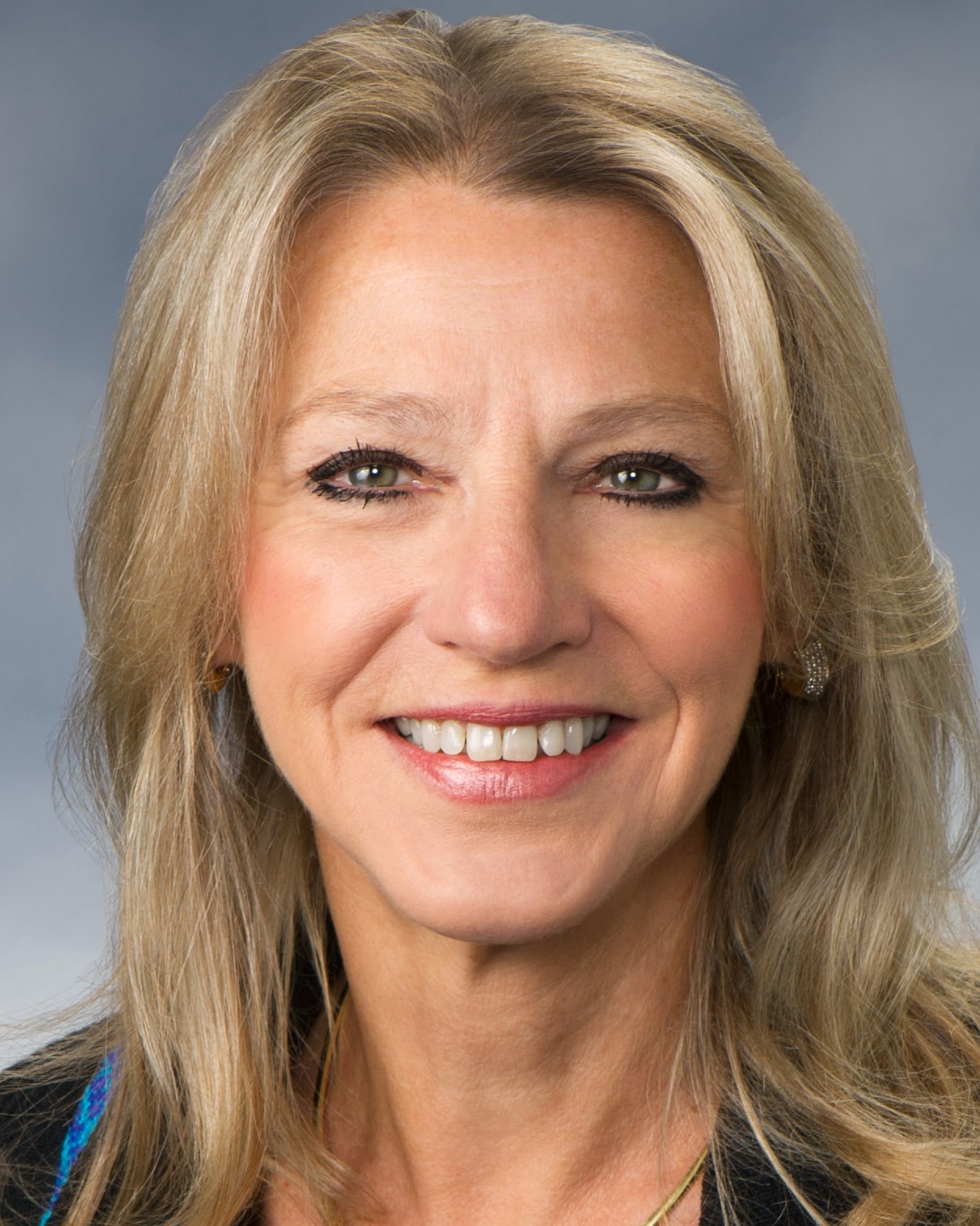
Barbara L Dutrow, 68, is currently the Gerald Cire & Lena Grand Williams Alumni Professor in the Department of Geology and Geophysics at Louisiana State University (LSU) in Baton Rouge, Louisiana, U.S.A. Professor Dutrow received her B.S. from Chadron State College in Nebraska, and her M.S. and Ph. D from Southern Methodist University in Dallas, Texas. During this time, she was one of the first scientists to employ the ion microprobe to quantitatively determine light element compositions of rock-forming minerals and use this data to understand their impact on thermodynamic properties. She was awarded the prestigious Alexander von Humboldt Fellowship to conduct research at Ruhr University in Bochum, (then West) Germany. There she conducted high-pressure, high-temperature experiments determining stability relationships and crystal chemical constraints of several important rock-forming minerals. After her post-doctoral work, she returned to the U.S. and held a research position at the University of Arizona, analyzing heat and mass transport in fluid-rock systems, and a visiting faculty position in mineralogy at the University of Iowa, where she oversaw the X-ray diffraction laboratory, before moving to LSU in 1992. During her tenure at LSU, she was an affiliate scientist at Los Alamos National Laboratory, in New Mexico, and a visiting scientist at the University of Lausanne (UNIL), Switzerland and Goethe-Universität in Frankfurt am Main, Germany.
For her mineralogical and educational endeavors Dutrow holds several honors, including having a new mineral of the tourmaline group named for her in 2019: dutrowite. An isostructural magnesium-rich species of dutrowite was later discovered and is named magnesio-dutrowite. She received the 2021 Carnegie Mineralogical Award for her contributions to mineralogical research, teaching and service and the Association of Women Geoscientists – Outstanding Educator Award in 2016. She has given numerous invited presentations on her research around the world.
Her involvement and leadership in the mineralogical and geological community is broad. Currently, she is on the Board of Governors of the Gemological Institute of America (GIA), in the last year of a 9-year term, and has chaired both the Governance and Education committees and serves on the Lab and Research committee. She is a Fellow of the Mineralogical Society of America (MSA, 1995), elected as MSA Vice-President (2006-2007), and served as MSA President (2007-2008). She is a Fellow of the Geological Society of America (2007) and was elected to President of the Geological Society of America (a world-wide society of ~20,000) in 2021-2022, having served as Presidentelect (2020-2021), and Past President (2022-2023). She serves on committees for the Geochemical Society, and as a member of the Executive Committee for the journal Elements. Previously, she served on the U.S. National Academy of Sciences Board on Earth Sciences and Resources, as a panel member on NAS study for the development of geologic repositories for high-level radioactive waste (2002-2003) and as a panel member for several U.S. Department of Energy programs including those of the Office of Geothermal Energy. She has been a distinguished lecturer for the MSA, Sigma Xi, and the Association for Women Geoscientists. She is co-author of the Manual of Mineral Science (after James Dwight Dana), which is the premier introductory mineralogy at universities around the world, now in its 23rd edition. A 24th edition is nearing completion.
Her research spans from continental scale tectonometamorphism to micrometer scale crystallochemical interactions in minerals. It encompasses incorporation of time-transient 3-D computational modeling of heat and mass transport, to field, and analytical approaches to investigate thermal-chemical-mechanical feedback in fluid-rock systems ranging from geothermal systems to high-temperature metamorphic and metasomatic systems. Dutrow is known for her influential research in the crystal chemistry and stability of geologically important rock-forming minerals and their use to decipher past and present geological conditions. She is widely known for her innovations in teaching, developing multidisciplinary courses focusing on earth materials and sustainability for the energy transition, research in visual communication, and mentoring for workplace development.
Full biography: https://www.flogen.org/sips2025/pdfs/Barbara_Dutrow_Bio.pdf
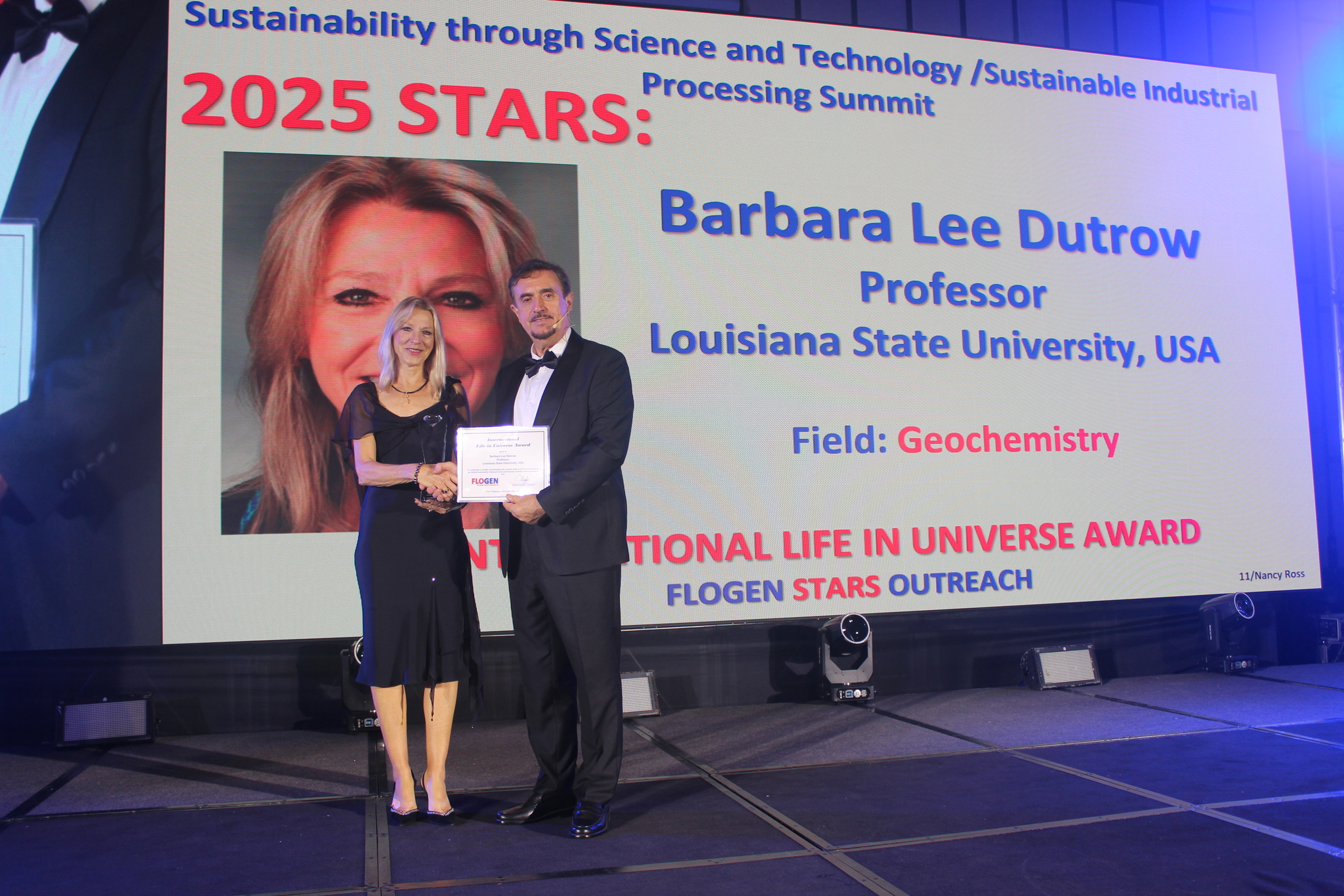
Dr. Barbara Dutrow receiving the International Life in Universe Award from Dr. Florian Kongoli at FLOGEN SIPS 2025
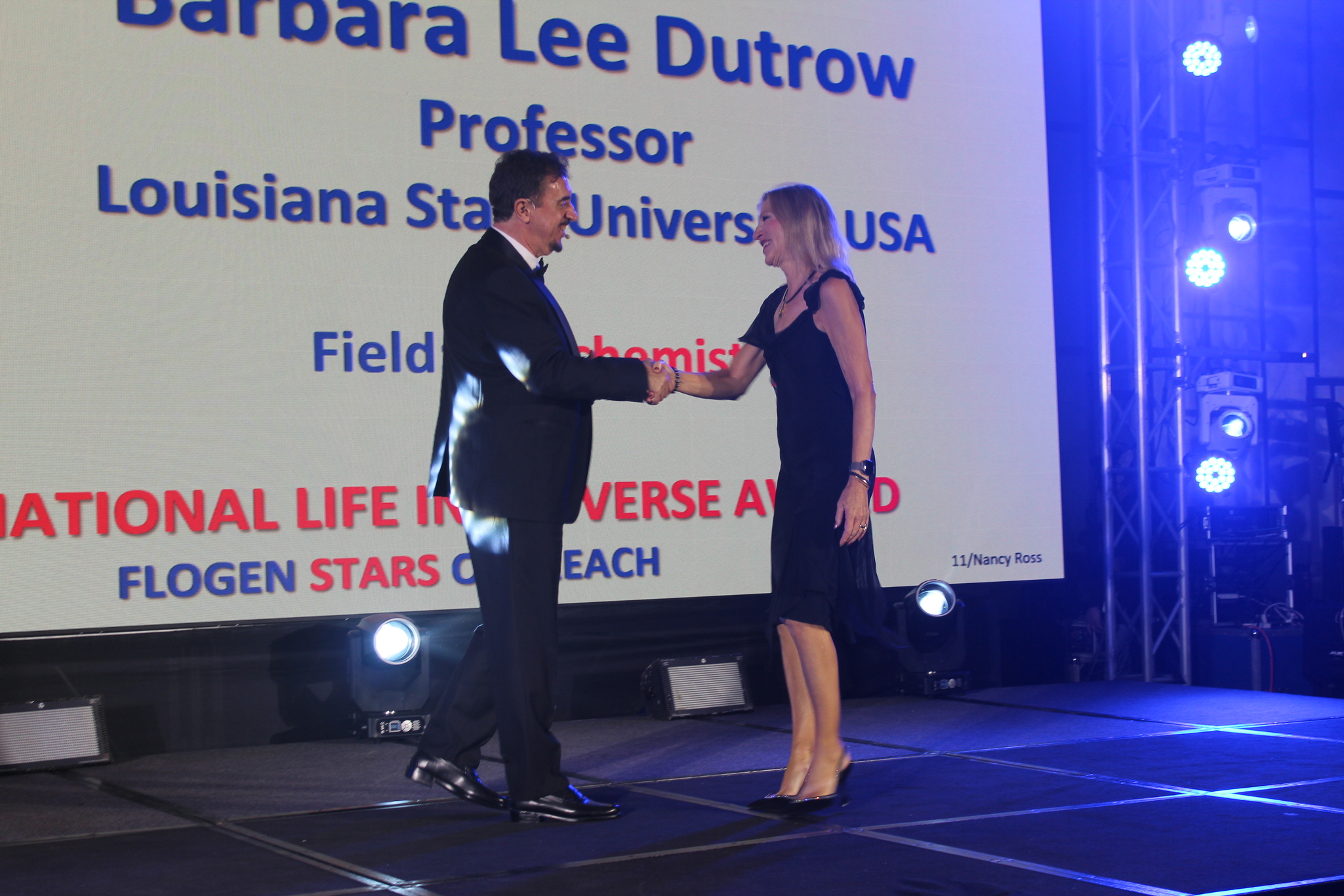
Dr. Florian Kongoli congratulating Dr. Barbara Dutrow during the FLOGEN SIPS 2025 award ceremony
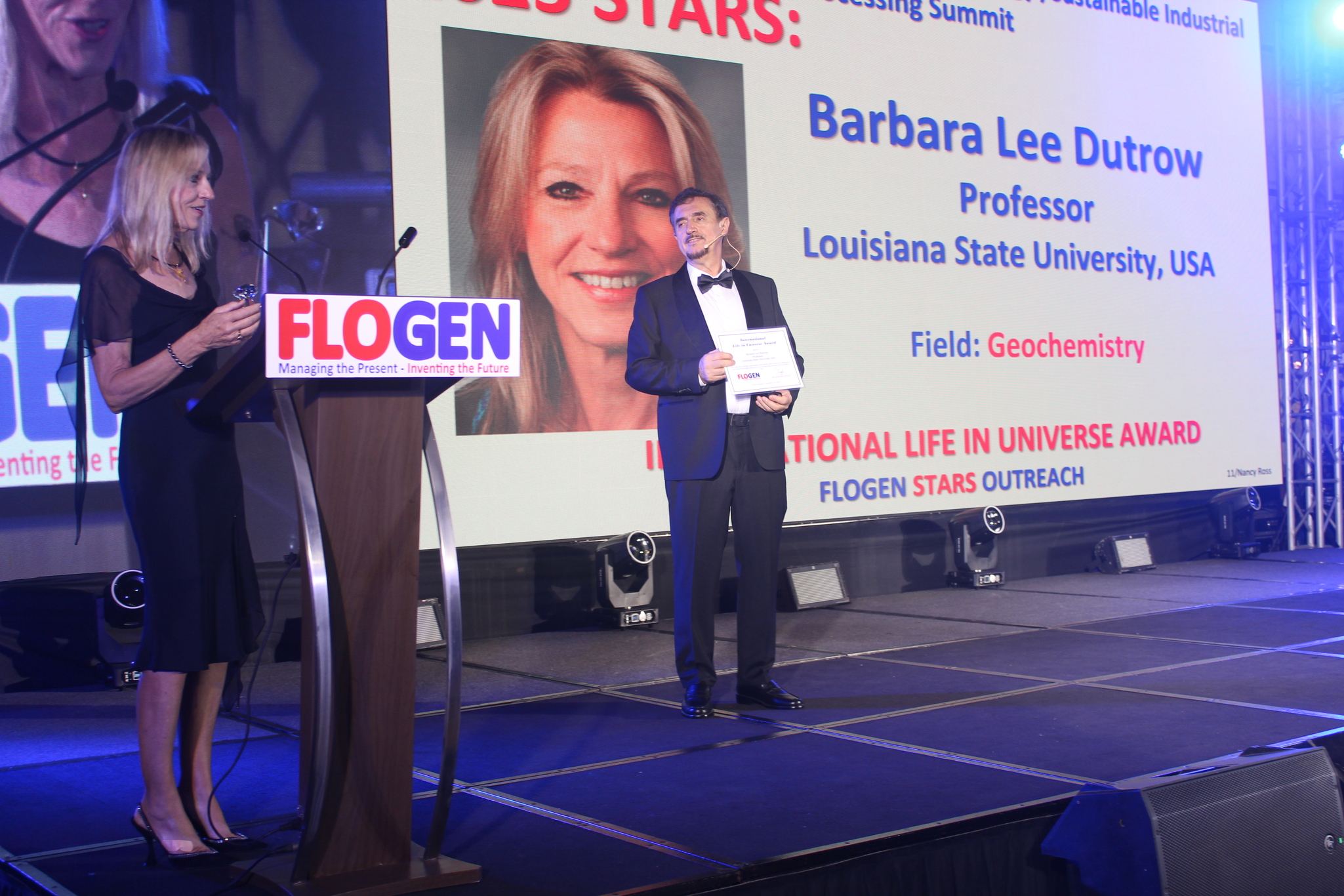
Dr. Barbara Dutrow delivering an acceptance speech during the FLOGEN SIPS 2025 award ceremony
Video of the FLOGEN SIPS 2025 Award ceremony where Dr. Barbara Dutrow won the International Life in Universe Award. The ceremony was hosted by Dr. Florian Kongoli, chairman of FLOGEN.